
Blog
June 10, 2026
Protecting Every Path to Family
Love, care, and commitment are what make a family, but the law protects it. Even as organizations that have long opposed equality recycle old, debunked arguments to restrict marriage rights, parentage protections, and access to fertility care for LGBTQ+ people and others based on one narrow definition of family, we’re making tremendous progress toward ensuring that everyone is free to start a family on their own terms and have secure legal parent-child relationships regardless of biological connection.
In recent months, GLAD Law helped secure passage of a law in Connecticut to ensure more equitable treatment for all families in that state. Connecticut removed a big barrier to family building for many people with HB 5374, which requires private insurers to cover fertility health care for LGBTQ+ couples and single individuals and aligns Connecticut’s private insurance with the current standard-of-care definition of infertility for coverage.
These victories highlight GLAD Law’s ongoing work to protect children, to secure comprehensive paths to family recognition and security for the diverse array of American families, and to establish equitable access to fertility care for LGBTQ+ people and others.
They’re also a rebuke to the so-called “Greater Than” campaign. This initiative seeks to prohibit legal recognition for any family that does not include a married mother and father and their biological children, including overturning the Supreme Court’s decision affirming the freedom to marry in Obergefell v. Hodges. The campaign was spearheaded by the organization “Them Before Us,” which is funded partly by the Heritage Foundation, the organization responsible for Project 2025, the Trump administration’s adopted blueprint to dismantle democracy and turn back the clock on gender equality.

with Jim Obergefell at the
Supreme Court
The Greater Than campaign has yet to initiate legal action to overturn Obergefell, and any such action would have a very high bar to succeed. In fact, in November, the Supreme Court denied a request to revisit marriage equality in response to a petition submitted by a former Kentucky county clerk who was sued for refusing to grant marriage licenses to same-sex couples. GLAD Law has a designated marriage defense team monitoring for any legitimate effort to challenge marriage equality and preparing every possible legal argument to defend it, should a real threat ever emerge.
“The only thing that has changed since Obergefell was decided is that people across the country have seen how marriage equality provides protection for families and children, and that protection strengthens communities, the economy, and our society,” said Mary Bonauto, GLAD Law Senior Director of Civil Rights and Legal Strategies. “All families deserve equal rights under the law.”
Meanwhile, Them Before Us has actively opposed efforts to strengthen and expand family protections and access to fertility health care, testifying against a bill in Michigan which later became law. In 2017, the organization filed a brief supporting an Arkansas court decision that barred same-sex married couples from having both spouses’ names listed on their children’s birth certificates in the Supreme Court case Pavan v. Smith, which was ultimately decided in favor of the families.
“This campaign is an ill-considered attempt to undo marriage equality using outdated arguments about who is best suited to raise children, despite abundant data showing children of LGBTQ+ parents, like all children, thrive in homes with one or more adults who love and care for them. But their agenda also attacks no-fault divorce. It opposes surrogacy, fertility health care, and protections for children born through fertility health care,” said Polly Crozier, GLAD Law’s Director of Family Advocacy. “Taken together, it’s an extreme vision that would harm countless other Americans, not just LGBTQ+ families. What they’re pushing is a narrow definition of how families and society should function that the majority of Americans don’t support.”
That’s because more Americans personally know LGBTQ+ families and families formed through IVF, surrogacy, adoption, and other paths to parenthood, and believe all children should have the security of family recognition, no matter how their families came to be. As people share their own stories about struggling to access fertility care, encountering outdated parentage laws, or growing up with LGBTQ+ parents, it’s harder for extremist campaigns to rely on misinformation and fearmongering. The reality is that there is no single model for what an American family looks like, and these stories show politicians and policymakers what’s at stake when families aren’t fully protected under the law.
We’ll continue to uplift the stories of real people and families to emphasize the need for all children to have secure legal relationships with their parents, regardless of their biological connection or how their family was formed, and to ensure that LGBTQ+ people have equitable access to fertility health care.
That means collaborating with partners to advance pending bills in Massachusetts, Michigan, and Rhode Island to ensure that being LGBTQ+ isn’t a barrier to accessing fertility care, and to pass bills to update family protection laws in Pennsylvania and New Jersey.
“The extremists behind the Greater Than campaign can try to narrow the definition of family, but they can’t erase the millions of diverse and loving families – including LGBTQ+ families – already thriving across the country,” Polly said. “We’re going to make sure the law protects them.”
The Enduring Power of Personal Stories
In 1978 – the same year GLAD Law was founded – Harvey Milk urged gay and lesbian Californians to come out in order to defeat a referendum banning gay people from working in public schools. Only by living openly, he argued, could LGBTQ+ people “break down the myths, destroy the lies and distortions” about them. The cruel paradox was that those lies endured precisely because it was often unsafe to be out. But Milk was right, and our community’s courage won the day. The ballot initiative went down to defeat.
LGBTQ+ people have been sharing our stories since, being vulnerable with loved ones, co-workers, faith communities, and the media to help shape public understanding of our lives, our families, our challenges, and our triumphs.
Personal stories remain one of the most powerful tools we have for changing hearts, minds, and policy, especially in this time of relentless federal attacks on our community. They are key to GLAD Law’s legislative advocacy.
“When lawmakers hear directly from the people they represent, policy stops being abstract and becomes personal,” Polly said. “Two minutes of a constituent’s personal testimony can really move policy.”

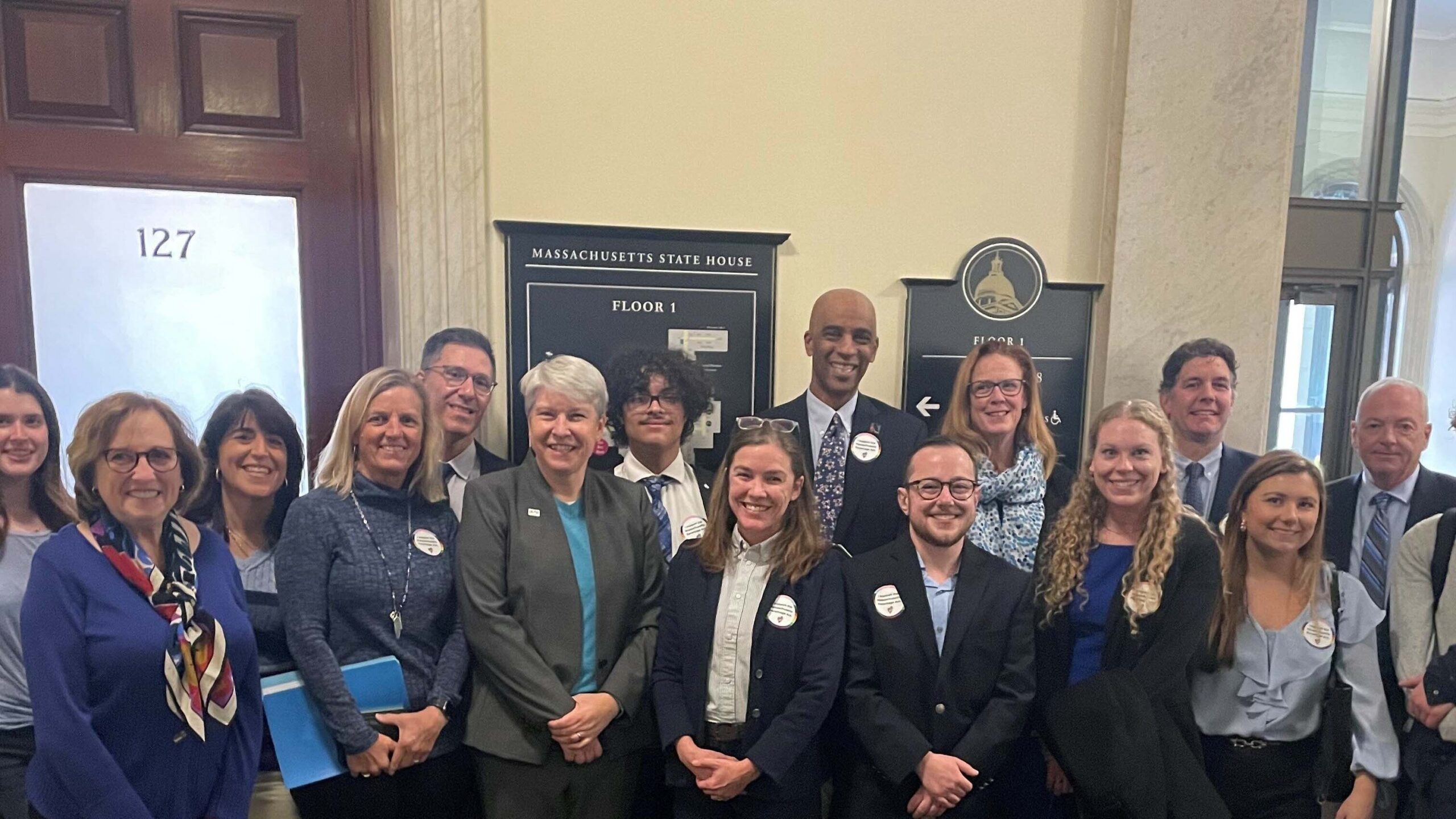
That’s how Geoff Worrell, a father of three and grandfather to seven, wound up testifying a few years back in favor of the Massachusetts Parentage Act, which is now law. He shared the story of how his eldest daughter Lyndsay and her wife had to adopt their own children, twins to whom Lyndsay gave birth, in order to establish their legal parentage. “It was so illuminating for legislators to hear this grandfather share the different experiences of his gay child and his straight children,” Polly said. “It cut right through to the inequality and its intergenerational impact on families.”
Watch Geoff share his story on YouTube
Geoff, who continues to advocate for LGBTQ+ family protections, said he is motivated to speak out by his deeply held values of family and fairness – which were shaped in part by his lived experience as both a Black man and a spouse in an interracial marriage – and honesty and integrity. “I think it’s really important for people to take action for what they believe in,” he said. “I need to do what’s right not only for myself, but what sort of example are you setting for your kids and your grandkids if you don’t stand up for what’s right?”
Indeed, in moments like this, your story matters! It reminds political leaders, policy makers, and the public what’s at stake: real children, real families, real lives. If you are part of an LGBTQ+ family, love someone who is, or want to share your family story to reflect the richness and diversity of American families, we want to connect with you. In raising our voices together, we can affirm what children need to succeed, counter fear and misinformation, and strengthen the fight for equality for all. Visit GLADLaw.org/ShareYourStory.
This story was originally published in the Summer 2026 GLAD Law Briefs newsletter. Read more.
 Español de México
 Português
 简体中文
 香港中文
 Français
 Tiếng Việt
 العربية
 Polski
 Русский
 Deutsch
 Kreyòl Ayisyen