
Briefs and Annual Report Winter 2025
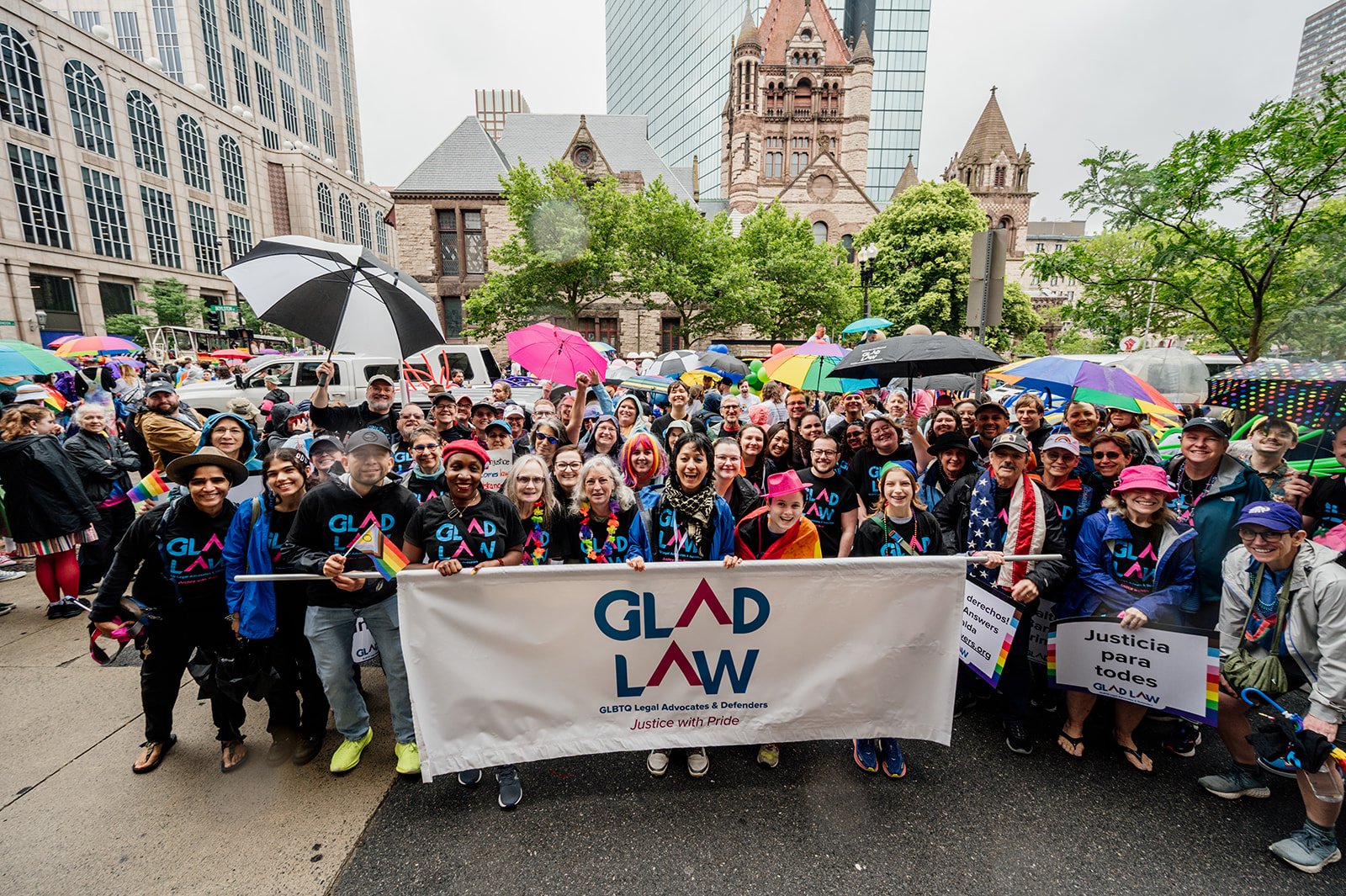
GLAD Law staff and supporters marching at Boston Pride for the People
In This Issue





From Executive Director Ricardo Martinez

We at GLAD Law believe in something bigger than ourselves: a vision of justice, freedom, and a world where LGBTQ+ people live and thrive with dignity and equality under the law. That vision is under attack. What we face today is not politics as usual, but a coordinated campaign of fear, disinformation, and state-sanctioned cruelty designed to isolate us, criminalize us, and distract the public from deeper failures of governance. We are being targeted as scapegoats – but we refuse to be intimidated or pushed aside.
GLAD Law’s response is not rooted in despair. It’s rooted in discipline, courage, and action.
Our movement has never relied on permission to exist or to fight for our rights – from the pre-Stonewall era to the AIDS crisis, to the battles for marriage equality and today’s struggle for transgender justice. We come from a lineage of people who resisted, organized, and reshaped the world around them. And we carry that legacy forward for the young people watching us now, hoping – trusting – that we will keep moving.
Our strategy is designed to secure lasting safety, dignity, and legal equality for LGBTQ+ people, while defending democracy itself. In this issue, learn more about six ways we are leading the fight for justice:
- launching a surge of litigation against anti-democratic and anti-LGBTQ+ power grabs
- ensuring protections for transgender youth, who have faced brutal scrutiny and scapegoating from federal and some state governments
- providing support with GLAD Law Answers so families under attack know their rights and never feel abandoned
- strengthening legal protections for LGBTQ+ people at their place of employment
- building power through deep collaboration with local, regional, and national partners to protect our rights
- preparing to defend marriage equality in the long-term
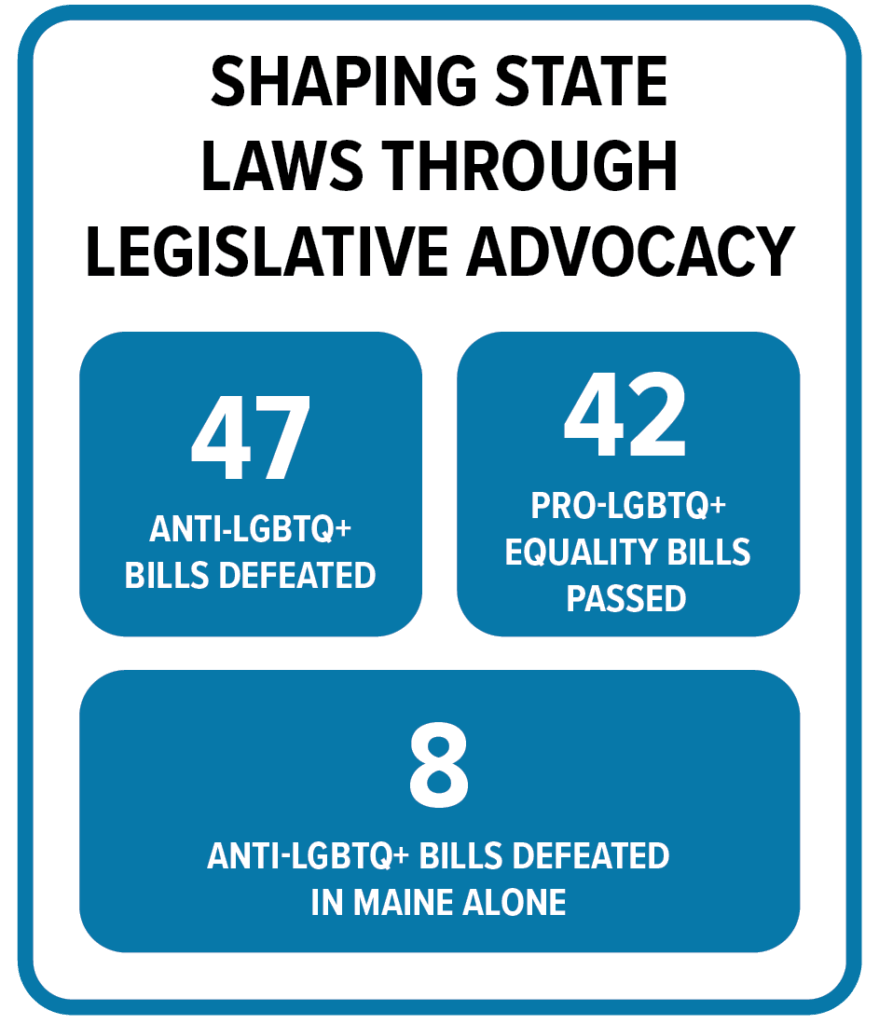
This strategy is producing real results. With partners, we defeated eight anti-transgender bills in Maine; advanced HIV prevention through PrEP access legislation in Maine and Massachusetts; implemented the Massachusetts Parentage Act and improved parentage protections in six additional states; and secured injunctions blocking harmful Trump-era executive orders – protecting, among others, 19 transgender women who would have been transferred to men’s prisons. We helped halt New Hampshire’s ban on DEI programs and strengthened Massachusetts’ shield law to protect access to essential health care. Each achievement reflects coordinated, precise, and unyielding advocacy.
These gains happen because our team – attorneys, advocates, staff, and partners work diligently and tirelessly. They answer calls from families in crisis, review hundreds of pages of harmful legislation, and pursue cases where the stakes are human lives and futures. Their resolve keeps this work moving, even as demand grows and the opposition accelerates.
This moment requires clarity and commitment. Transgender youth, LGBTQ+ elders, families fighting to stay safe, and communities relying on continued investment in HIV prevention and research all need us fully engaged. While our opponents are well-funded and relentless, we meet them with strategy, coalition power, and the courage to act.
We will continue to fight. We will continue to litigate. We will continue to organize.
And together, we will win.
Thank you for fueling this work and for helping build a future defined not by fear, but by justice, dignity, and the freedom for all of us to live fully and safely.
Forward, toward justice with pride,

Ricardo Martinez, Executive Director
GLAD Law Staff
Carole Allen-Scannell, Director of Development
Josh Arsenault, Assistant Director of Strategic Partnerships
Sarah Austin, Staff Attorney
Donovan Bendana, Liman Law Fellow
Mary L. Bonauto, Senior Director of Civil Rights and Legal Strategies
Christopher Borger-Hernandez, Office Manager
Eva Boyce, Chief Financial Officer
Gary Buseck, Tim Stein & Wayne Fette Senior Advisor
Jordan Caress-Wheelwright, Assistant Director of Planned and Individual Giving
Patience Crozier, Director of Family Advocacy
Braedyn Dorn, Communications and Public Education Coordinator
Chris Erchull, Senior Staff Attorney
Kendrick Foster, Legal Assistant
Beth Grierson, Assistant Director of Operations and Administration
Michael Haley, Staff Attorney
Kayden Hall, GLAD Law Answers Manager
Amber Hoy, Development Marketing Coordinator
Hannah Hussey, Staff Attorney
Susie Husted, Legal Team Operations Manager
Maryam Izadshenas, Legal Assistant
Amanda Johnston, Director of Communications and Public Education
Ivory King, Assistant Director of Communications and Public Engagement
Bennett Klein, Senior Director of Litigation and HIV Law
Jennifer L. Levi, Senior Director of Transgender and Queer Rights
Ben Marcus, Senior Constitutional Law Fellow
Ricardo Martinez, Executive Director
Carol Marton, Business Manager
Qwin Mbabazi, Senior Manager of Organizational Culture and Community Partnerships
Gabrielle Navarro, Senior Manager of Public Information
Amy Ojeaburu, Legal Assistant
Mads Ouellette, Database Systems Manager
Renae Paulson, Development Assistant
Michelle Peng, Fundraising Events Manager
Aria Pierce, Senior Manager of Institutional Giving
Rachel Ramirez-Gaudet, Digital Content and Social Media Coordinator
Lisa Rodriguez-Ross, Staff Attorney
Mo Rodriguez-Ross, GLAD Law Answers Assistant
Joshua Rovenger, Legal Director
Jo Troll, Finance and Operations Coordinator
Bob Tumposky, IT Manager
Aaron Wolfson, Digital Media Manager
Angela Wu, Constitutional Law Fellow
Board of Directors
Joseph Metmowlee Garland, President
Dallas M. Ducar, MSN, RN, NP, CNL, FAAN, Vice President
Marlene Seltzer, Treasurer
Beth R. Myers, Clerk
Shane Dunn, Immediate Past President
Jamie Bergeron
Inga S. Bernstein
Annika Bockius-Suwyn
Jean-Phillip Brignol
Alexandra Chandler
Ray Cheng
Nima Eshghi
Rachel Goldberg
Sarah Kaplan
Lee Swislow
Matt Wilder
Jacob Smith Yang
GLAD Law Answers Update 2025
The last year has been one of tremendous impact for GLAD Law Answers. After the 2024 election, hundreds of people reached out with questions, concerns, and fear about what a second Trump administration would mean for LGBTQ+ people and people with HIV. In November 2024 we received nearly 2.5 times as many intakes as we did in November of the previous year.
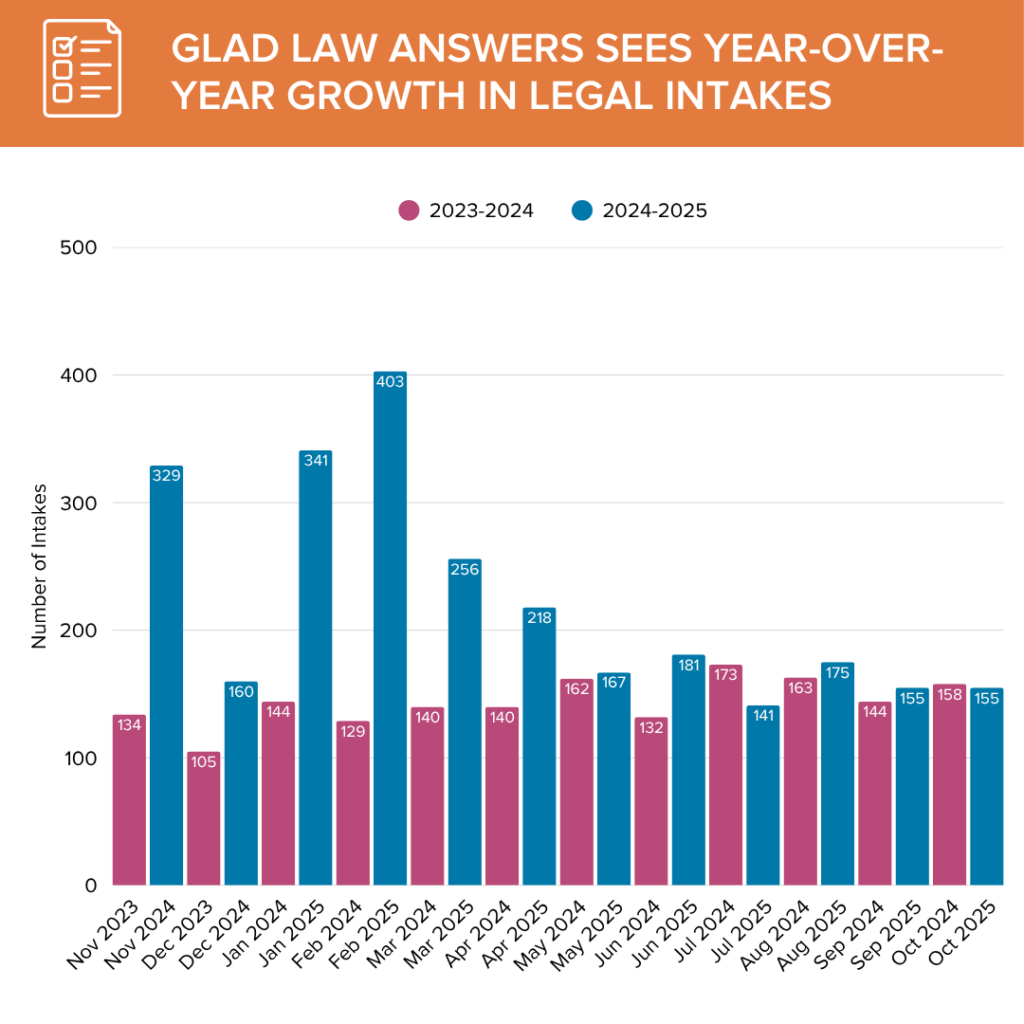
Requests came in at much higher rates for months. Even now, as we reach the one-year-mark from the election, we are still at higher numbers than at the same time last year. But as our lawsuits continue through the courts, our community knows now, more than ever, that we have their back.
People who call GLAD Law Answers have a lot of concerns stemming from Trump’s executive orders that have targeted transgender people. Since the beginning of the year, GLAD Law Answers has focused on sharing resources to assist people in navigating these ongoing attacks.
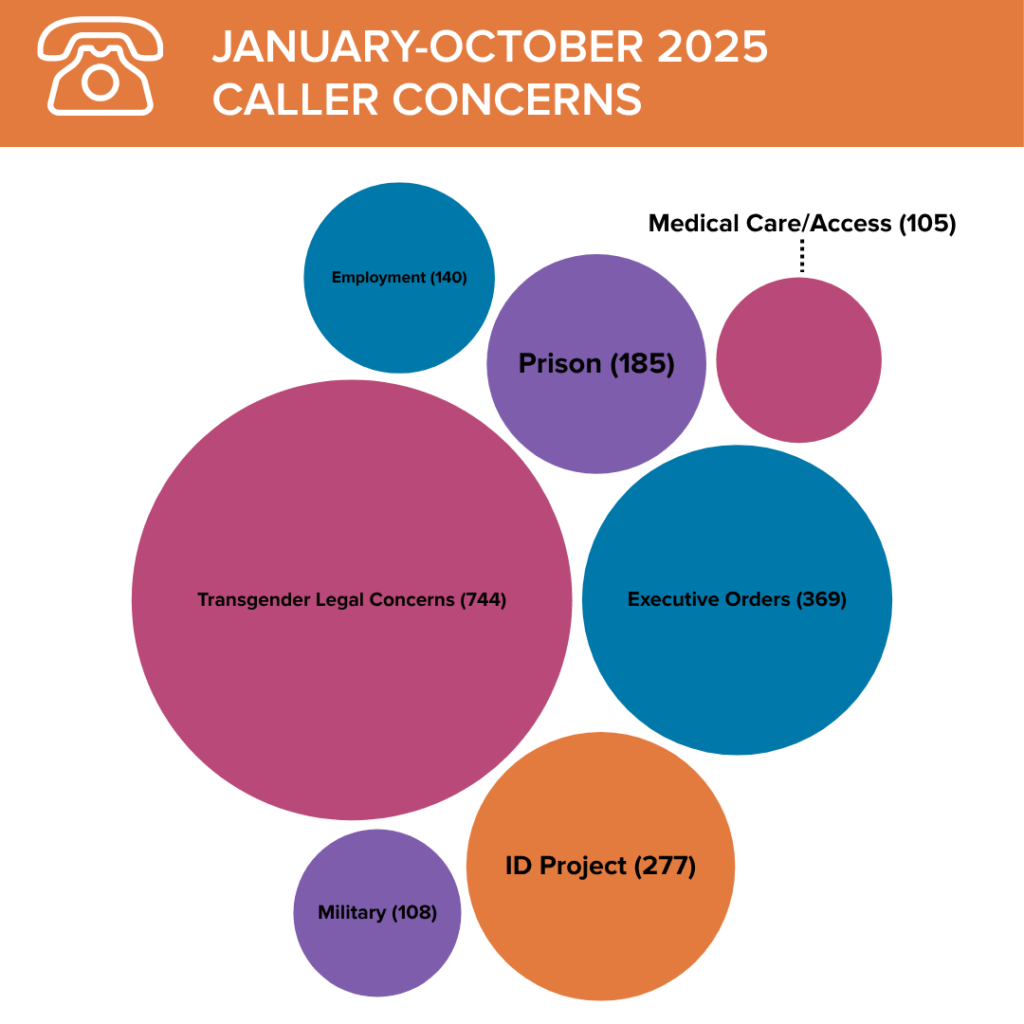
Immediately after the 2024 election, it was clear that our community was worried about our families, LGBTQ+ children, and transgender youth and adults in all areas of life. We’ve been at the front lines to keep LGBTQ+ people protected – learn more about our fight against the federal government’s attacks and how we’re advancing progress in the states in the Legal Update.
Every day, we work to protect our rights and keep us moving forward. To learn more about your rights, visit our website. If you have questions or need help, contact GLAD Law Answers. You can also help us bring legal resources to more people who need them – join the Lawyer Referral Service or volunteer.
Legacy Society Spotlight: Tristan Rushton and Matt Fecteau Look to the Future
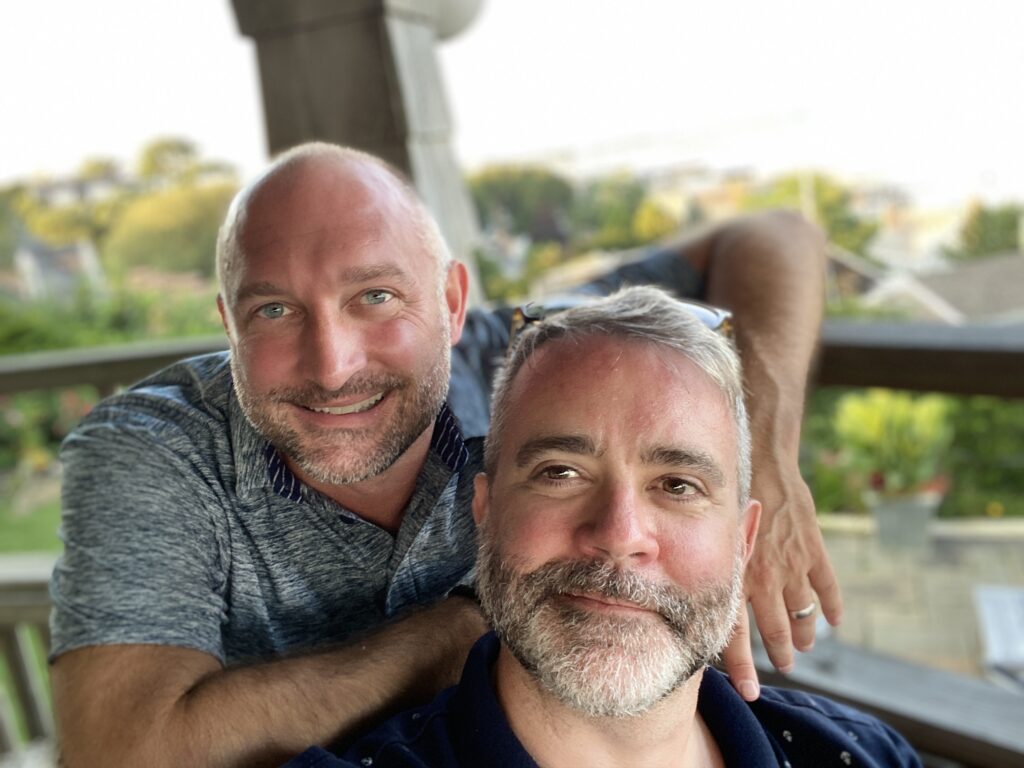
Tristan Rushton and Matt Fecteau both discovered GLAD Law in the aftermath of the landmark Goodridge decision that cemented marriage equality in Massachusetts in 2004. They were in their mid-twenties and both navigating young adulthood in Boston.
“I just remember that the Boston Globe Magazine did a profile on Mary Bonauto. I think that was my first real intro to the work that GLAD Law did (and does). And I remember thinking just how awesome it was. She just seemed like such a powerful lawyer – it made me want to go into the law myself,” recalls Matt.
Though they went to college together and met briefly back then, Matt and Tristan didn’t start dating until they reconnected in Provincetown in 2007. Ten years later, on the anniversary of their first date, they were married in downtown Boston.
They’ve shared a commitment to GLAD Law almost as long as they’ve been together. “Pretty early on in our time together, we decided (GLAD Law) was a very important thing to support and that good work was being done, and actually productive work,” says Tristan.
Inspired by Mary Bonauto, among others, Matt eventually attended law school and began a second career as an estate planning attorney in his 30s. This has given him key insight into the importance of estate planning for LGBTQ+ couples and families.
“You just can’t predict what’s going to happen,” Matt says. “When you don’t have an estate plan, you’re leaving the disposition of your property up to state law … It’s important to really be specific about how you want things handled when you’re not here. We don’t have children to leave things to, so, you know, it’s even more important for us to make those conscious decisions.”
One of Tristan and Matt’s conscious decisions was to include GLAD Law in their estate plan, an action born out of their mutual commitment to the work and their faith in GLAD Law to continue to show up and get results for the LGBTQ+ community.
“I think we feel a level of connection to GLAD Law that we don’t feel to a lot of other organizations. We live in Boston. It’s a local organization … We’re glad to support it,” Matt says. “When (GLAD Law) advocates strongly in the court system for their clients, it has an effect on all of us. And so I think it’s important that GLAD Law has the resources that it needs to continue to do what it does so well: expanding rights where it can.”
Matt and Tristan acknowledge that they feel the weight of this moment and are looking for ways to make an impact with the resources they have.
According to Matt, a gift in their wills “allows us to support an organization that we care about in a more meaningful way.” He continues, “We can’t write a big check right now, but we can do it after the fact, after we’re gone. It gives us the opportunity to make a big commitment without having to use assets that we currently need.”
Planned gifts like Tristan and Matt’s ensure that GLAD Law can sustain our work and build our impact for generations to come. There will be many battles ahead and, as he explains, Tristan trusts GLAD Law to be on the frontlines defending the LGBTQ+ community:
“The work is always going to evolve. And we don’t know what the next front will be, but there’s clearly going to be another one. It’s an ever-present evolution that just needs to continue to be fought … And the courts are the place where you can protect those that aren’t the majority, which is all of our communities.”
To learn more about making a gift to GLAD Law in your estate plan, please visit GLADLaw.org/leave-a-legacy.
A Message from the Chief Financial Officer
GLAD Law’s financial health is strong.
We have 11.12 months of unrestricted reserves (i.e., net assets) as of March 31, 2025, including board designated net assets. While there are sufficient cash and investments to meet our current obligations, we face an uncertain climate and need to be equipped for the legal and legislative challenges ahead.
Our financial health is both intentional and important as we continue to make strategic investments in staff, litigation support, communication, public education, and infrastructure. Our five-year financial tool allows us to consider scenarios and discuss options and their impact on our reserves.
FY25 ended with an increase in net assets of $2.8m. For a non-profit, it is important to look at the components (see table below) and some highlights:
Net Assets: March 31, 2025
2776765
Operating Fund
4500001
Board Designated
7276766
Total Unrestricted
2442244
With Donor Restrictions
9719010
Total
- The unrestricted fund totals $7.2m and is up, $1.28m. This increase in net assets (or surplus) is primarily due to a $2m bequest expected in FY26 but received early in FY25.
- During FY25 and as part of the FY25 budget process, the board agreed to invest $500k to increase salaries and wages to 100% of market median so that GLAD Law could remain competitive and retain staff. This investment, along with a strategic plan to add more lawyers (4 have been hired so far), have long-term financial implications.
- Over the next few years, GLAD Law will be using reserves to complement an increase in overall fundraising and to fund strategic initiatives. With this backdrop, at the end of FY25, $1.03m was transferred to board-designated net assets for a total of $4.5m. As a result, a larger portion (62%) of GLAD Law’s unrestricted reserves is designated. We feel this is prudent.
- The donor-restricted fund consists of cash gifts and pledges restricted by the donor for a specific purpose or time. This fund increased by $1.5m, which means new gifts exceeded ‘releases’ in FY25.
- During FY25, GLAD Law received $8.1 million in donated legal services, an essential resource that supports our litigation work. This amount reflects a 4.5% increase in donated subject-matter time from pro bono attorneys compared to the prior year, expanding our capacity to pursue cutting-edge legal strategies. These donated services are reported as both an income source and an expenditure.
There are many challenges and opportunities, and we need your support and partnership. Thank you for investing in GLAD Law.
Eva N. Boyce
Chief Financial Officer
November 2025
Statement of Activities*
For the 12-month period ended March 31, 2025
| Support & Revenue | FY25 |
|---|---|
| Contributions & Grants | $9,589,276 |
| Special Events Revenue, net | $718,586 |
| Fees & program revenue | $201,545 |
| Donated Services (In-Kind Legal Fees)*** | $8,140,741 |
| Total Support & Revenue | $18,650,148 |
| Expenses | FY25 |
|---|---|
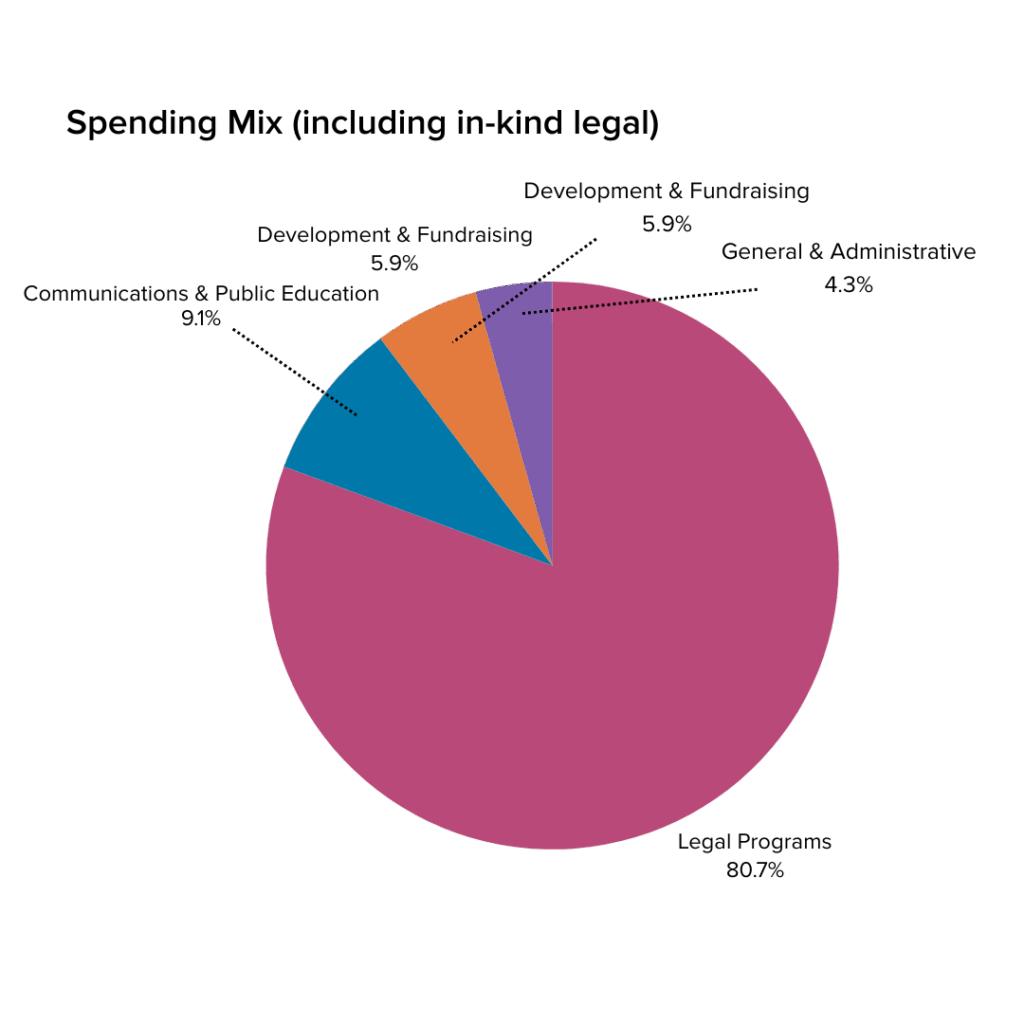
| Legal Programs*** | $12,874,103 |
| Communications & Public Education | $1,449,051 |
| Development & Fundraising | $946,824 |
| General & Administrative | $689,383 |
| Total Expenses | $15,959,361 |
| Other Revenue (Expenses) | FY25 |
|---|---|
| Investment Income, Gains, & Losses | $156,321 |
| Total Change in Net Assets | $2,847,108 ** |
| Net Assets, beginning of year | $6,871,902 |
|---|---|
| Net Assets, end of year | $9,719,010 |

Statement of Financial Position*
March 31, 2025
| Assets | FY25 |
|---|---|
| Cash & Cash Equivalents | $1,255,652 |
| Accounts Receivable & Pledges | $316,828 |
| Investments | $ 8,633,496 |
| Right-of-Use Lease Assets – Operating | $1,248,554 |
| Equipment, deposits & prepaid expenses | $432,990 |
| Total Assets | $11,887,520 |
| Net Assets | FY25 |
|---|---|
| Operating | $2,776,765 |
| Board Designated | $4,500,001 |
| Temporarily Restricted | $2,442,244 |
| Total Net Assets | $9,719,010 |
| Liabilities | FY25 |
|---|---|
| Accounts Payable & Accrued Expenses | $789,748 |
| Operating Lease Liabilities | $1,378,762 |
| Total Liabilities | $2,168,510 |
| Total Liabilities & Net Assets | $11,887,520 |
|---|
*Summarized from GLAD Law’s audit report; available on our website. Visit message from the CFO for more information.
**Visit “Change in Net Assets” chart
2025 Impact By the Numbers

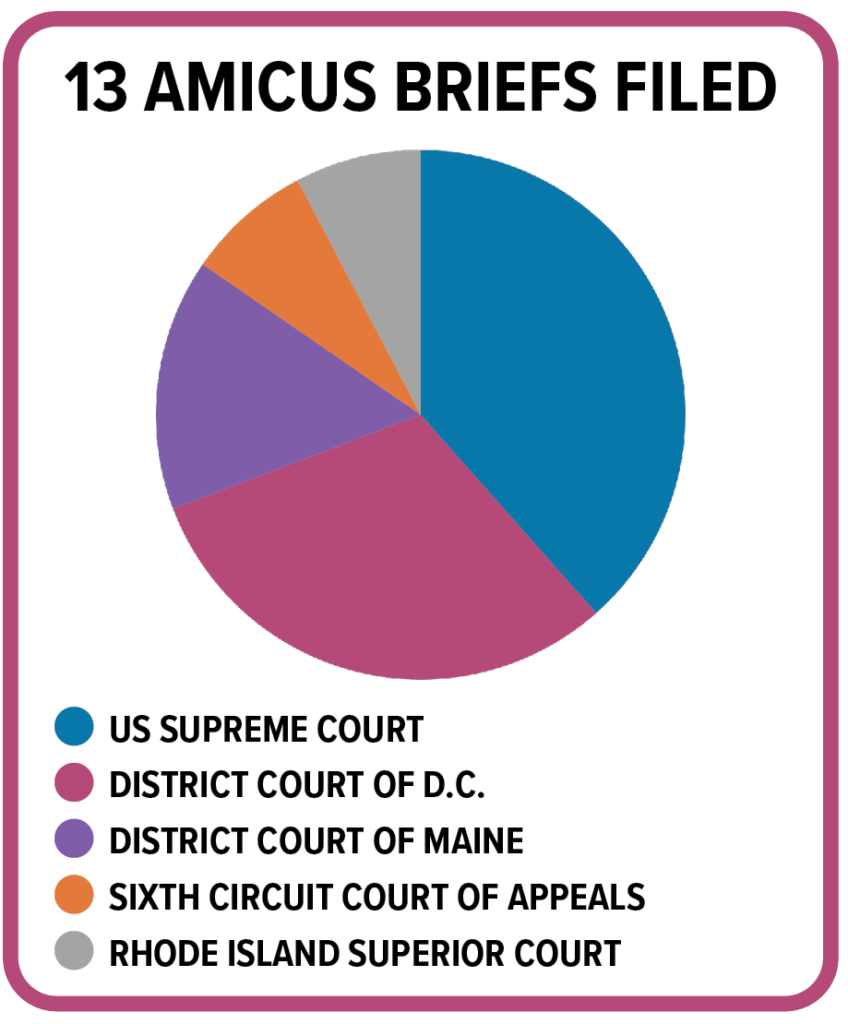
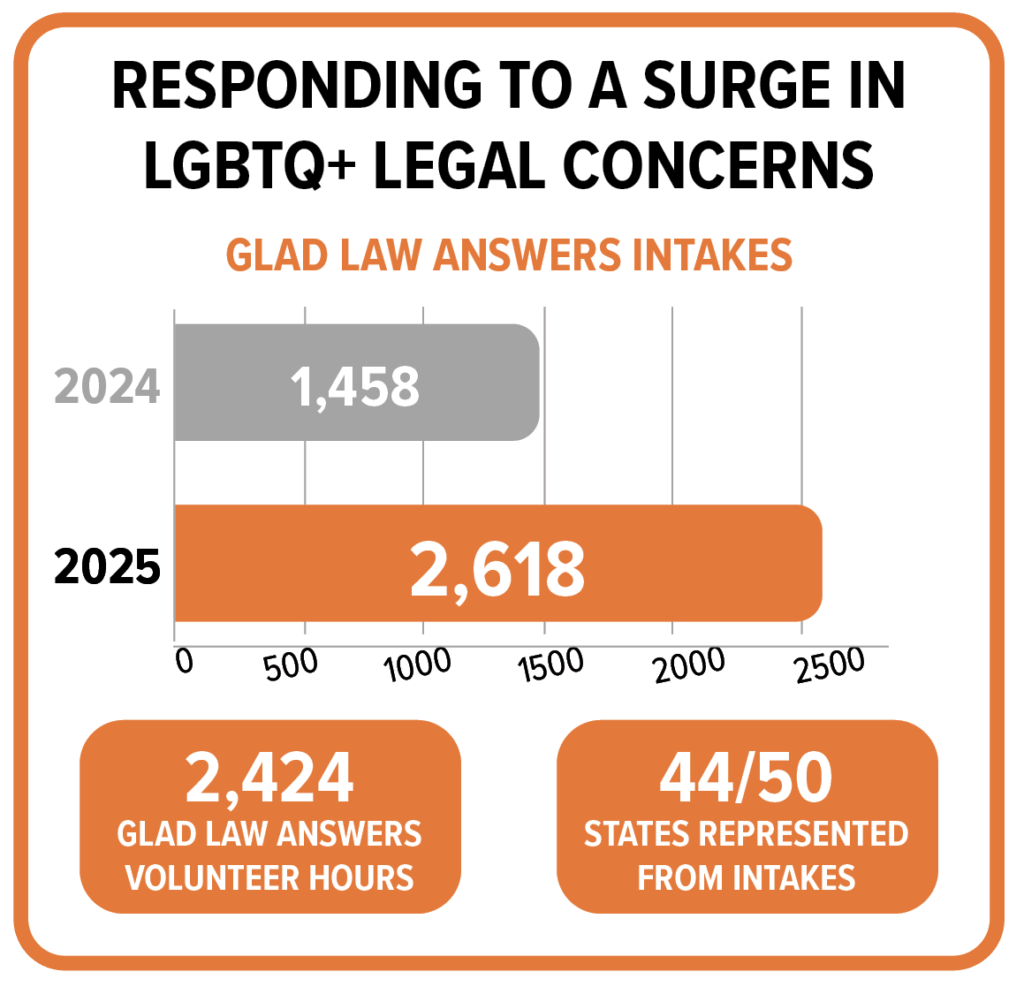

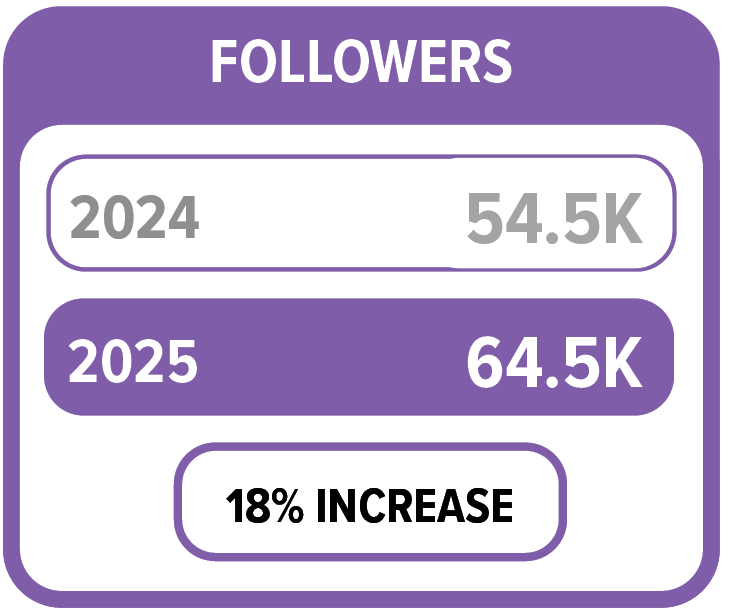
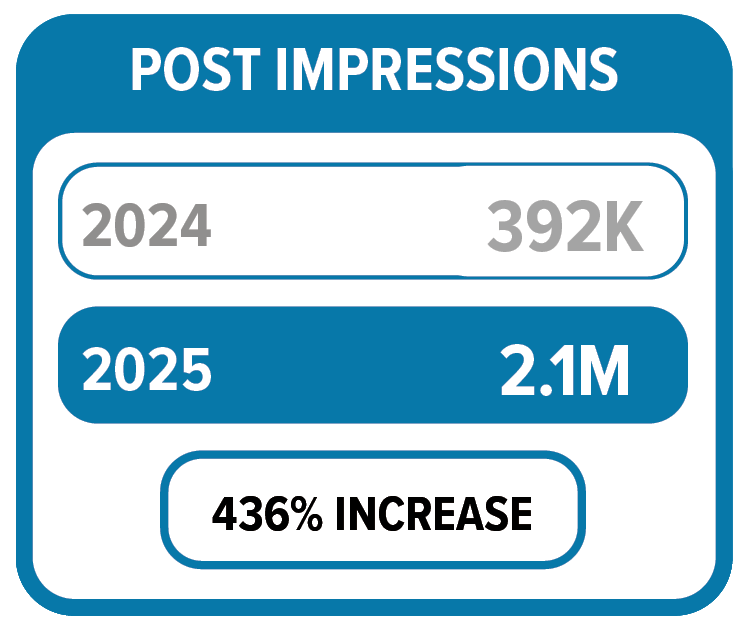
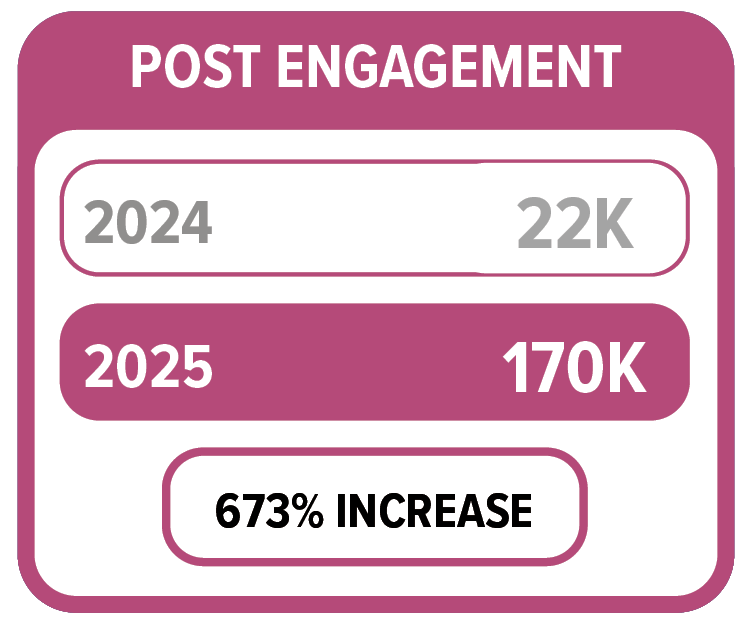
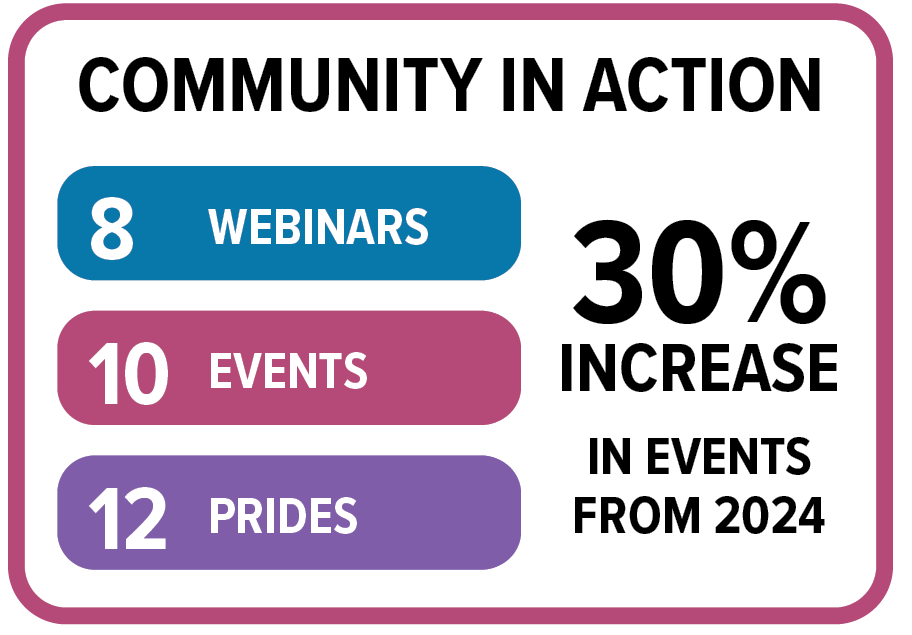
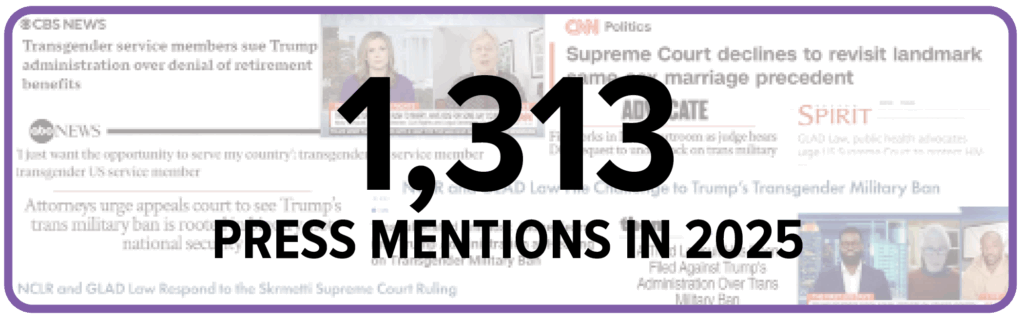
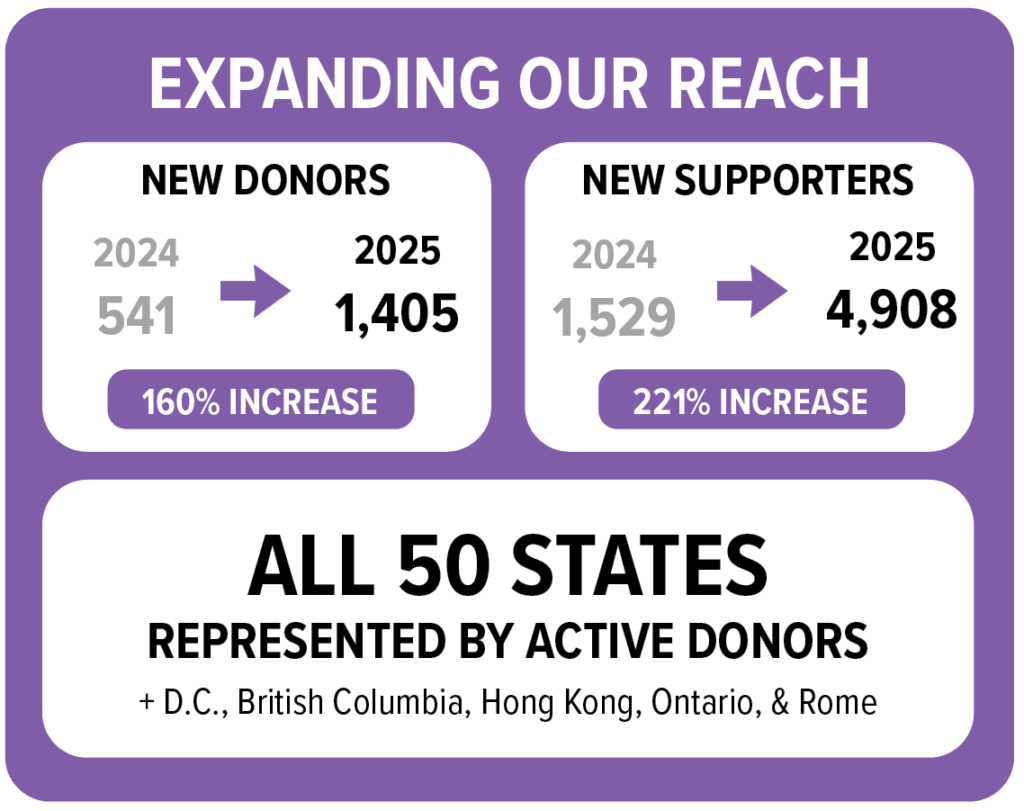
CULTIVATING AN ENGAGED, EMPOWERED ONLINE COMMUNITY


Legal Update
Litigation
Doe v. Bondi, Jones v. Bondi, and Moe v. Trump
In three separate lawsuits, Moe v. Trump, Jones v. Bondi, and Doe v. Bondi, we represent 19 incarcerated transgender women challenging a January 21, 2025, Trump executive order that would have forced our clients to be transferred from women’s facilities, where they are currently housed, to men’s prisons, placing them at severe risk of violence, including sexual assault. We quickly secured preliminary court orders that have prevented all of our clients from being transferred and ensures their continued access to ongoing gender transition-related medical care.
The administration appealed all three preliminary injunctions. We presented oral argument on September 5 before the DC Circuit Court of Appeals, urging the Court to keep the orders in place so that our clients remain in women’s housing and their safety is not put at heightened risk while the litigation continues. We are now awaiting the DC Circuit’s decision on the administration’s consolidated appeal of the injunctions.
GLAD Law is joined in this litigation by NCLR, Galvan & Grunfeld LLP, Lowenstein Sandler LLP, and Brown Goldstein & Levy LLP.
Challenging Our Government’s Betrayal of Those Who Serve
GLAD Law and our partners are challenging Trump Administration policies that betray and denigrate transgender individuals serving honorably in the military. Meet and share the stories of some of our plaintiffs – individuals who have devoted their lives to serving their country, at CourageToServe.org.
Talbott v. USA
GLAD Law is challenging the Trump administration’s executive order banning transgender people from military service – a policy that demeans transgender people as dishonest and unfit and purges them from careers they have built with courage and distinction.
Talbott was the first lawsuit filed against the ban and initially secured a ruling blocking it, exposing the ban as baseless and driven by animus. A May Supreme Court shadow docket order in a related case allowed the administration to begin enforcing the ban. But our fight continues to block the ban on behalf of transgender service members who have had their lives and those of their families upended by a policy that has nothing to do with their ability or accomplishments and everything to do with cruelty.
Our plaintiffs include leaders across all branches of the military – decorated Majors, Captains, Sergeants, and a Navy Pilot – whose exemplary records speak for themselves. Some have been a part of decorated military families spanning generations. They have served honorably throughout the country and the world on many deployments.
The administration has continued to betray these service members and denigrate their character and commitment, including depriving them of their right to present their record at their own separation hearings. Oral argument on the government’s appeal of our District Court order will take place before the D.C. Circuit Court of Appeals on January 22, 2026.
Talbott was filed in partnership with the National Center for LGBTQ Rights, Joseph Wardenski, of Wardenski P.C., Sara Kropf of Kropf Moseley PLLC, and Inga Bernstein of Zalkind Duncan & Bernstein.
Doe v. Department of Defense
Three military families are suing the Department of Defense after an abrupt and unlawful policy change that blocks their transgender dependents from accessing essential medical care. For nearly a decade, servicemembers and their families relied on the military health system to provide this care.
This spring, the Trump administration ordered the Department of Defense to prohibit military clinics and hospitals from providing care to transgender adolescent and adult dependents and barred TRICARE, the military’s insurance plan, from covering these services anywhere. The directive was issued without the legally required notice to Congress or affected families, leaving families scrambling to find new providers, pay out-of-pocket, or risk their dependents’ health.
This was a sweeping reversal of military health policy and a betrayal of military families who have sacrificed for our country. When a servicemember is deployed, they deserve to know their family is taken care of.
We filed on behalf of the families in the U.S. District Court for the District of Maryland along with our partners NCLR, Brown Goldstein & Levy, LLP, and Keker, Van Nest & Peters LLP.
Ireland v. USA
In November, we filed a new case in the Federal Court of Claims in DC, challenging the Air Force’s decision to revoke the already granted retirements of 17 transgender service members following the implementation of the transgender military ban. These are individuals who have served between 15 and 17 years in the Air Force or Space Force and who had received retirement orders that entitled them to a military pension and lifelong health care benefits.
Despite making a commitment to provide these benefits, the Air Force abruptly and baselessly reversed course and is forcing these members to go through the involuntary separation process under the ban. Many had already made plans for their post-military careers – getting jobs, moving cross-country, enrolling their kids in schools, and more – only to have their benefits ripped away. On top of this immediate upheaval, they face losing out on up to $1–2 million in lifetime pension benefits, as well as TRICARE health care coverage for themselves and their families. These are important benefits we promise in recognition of the sacrifices service members make through long-term service that make retirement planning more challenging than it is for civilians. For example, the demands of their military careers often prevent them from buying houses to build equity and cause their spouses to forego career opportunities.
We are asking the court to reinstate the rescinded retirements so that these service members can retire with the benefits they and their families have earned.
Ireland was filed in partnership with the National Center for LGBTQ Rights, Eli Segel and Michael Weingartner of Stapleton Segal & Cochran LLC, and Jeremy Spiegel of The Law Office of Jeremy Spiegel.
Title IX
Title IX of our federal civil rights laws prohibits sex-based discrimination in schools and educational programs that receive federal government funding. The law’s protections have not changed, but the Trump administration is using its own interpretation of Title IX to target select school systems that comply with the law, including its application to transgender students. At its heart, Title IX provides that students cannot be discriminated against because of sex in school programs and activities, including the right to participation and to enjoy the benefits of those programs and activities. Title IX (the counterpart of Title VI, forbidding discrimination based on race, national origin, and ethnicity) helps to create learning environments in which all students can thrive. That is why GLAD Law is supporting several school districts around the country who face investigations and threatened penalties because they apply Title IX as it is.
Specifically,
- We are directly involved in supporting efforts in three states to push back on attempts to condition education funding on acquiescence to the administration’s dictates about the reach of federal nondiscrimination law.
- We filed a brief in Maine in support of limiting a US Department of Justice subpoena seeking information to identify and obtain information about transgender students who are or may have been involved in high school sports.
- We are filing federal court briefs in important cases around the country involving support for students at schools. These cases are often framed as schools vs parents, when we know schools and parents are united in wanting support and success for students.
Chiles v. Salazar
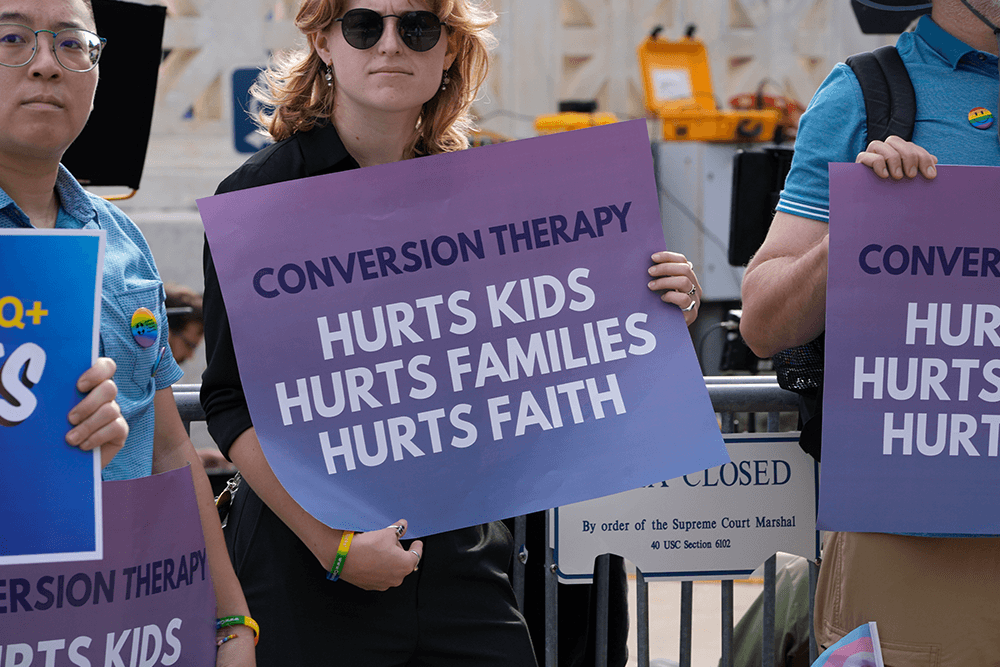
In Chiles v. Salazar, a licensed Colorado counselor filed a lawsuit against the state’s law protecting youth from conversion therapy, claiming it violates her free speech rights.
Colorado’s current law banning conversion practices has been in place since 2019, prohibiting licensed mental health professionals from engaging in conversion therapy with minors. Colorado is one of 23 states that protect youth from these harmful practices, which are both ineffective and
devastating for young people, their families, and their faith communities.
Our amicus brief shares the stories of multiple survivors of conversion practices, who experienced trauma, isolation, and fractured families. Read their powerful stories at GLADLaw.org/CTsurvivors.
The Supreme Court will issue a decision in Chiles v. Salazar by the end of June, which could shape the future of conversion therapy laws nationwide.
No young person should have to feel ashamed of who they are. GLAD Law has worked tirelessly over the years to pass laws across New England forbidding licensed health providers from providing this “treatment.” If these laws are struck down, we will build the next generation of laws and ethical standards to ensure kids and everyone knows they are “born perfect,” and there is nothing wrong with being LGBTQ+.
National Education Association – New Hampshire (NEA-NH) v. Formella
In October, GLAD Law and our partners secured a preliminary injunction blocking a sweeping school censorship law in New Hampshire. The challenged law, contained in House Bill 2’s budget provisions, sought to ban diversity, equity, and inclusion (DEI) programs addressing race, gender, sexual orientation, gender identity, and disability. It applied broadly across New Hampshire’s K–12 public schools, public and private colleges and universities, and public entities such as police departments and libraries.
This far-reaching restriction contradicts federal civil rights protections for students with disabilities and violates educators’ constitutional rights. Our injunction means that almost all school districts in New Hampshire can continue providing students a complete education that reflects the diversity of their communities.
GLAD Law is partnering with ACLU of New Hampshire, the ACLU’s Disability Rights Project and Racial Justice Program, and Drummond Woodsum & MacMahon in representing the plaintiffs, which include the National Education Association–New Hampshire (NEA-NH), four school districts (Oyster River Cooperative, Dover, Somersworth, and Grantham), diversity consultant James M. McKim, Jr., DEI administrator and psychology professor Dottie Morris, and New Hampshire Outright, a nonprofit that trains schools and public entities to foster inclusion and belonging for LGBTQ+ youth.
While the court’s order halts enforcement of the law, the case continues in federal court as we work to ensure that New Hampshire public schools can fulfill their essential role: preparing students to participate in a pluralistic democracy.
Condemning Proposed Changes to the Public Service Loan Forgiveness Program
GLAD Law joined over 250 organizations in speaking out against the Department of Education’s weaponization of the Public Service Loan Forgiveness (PSLF) Program. The program, created in 2007, forgives the balance of a borrower’s federal student loan once they have made 10 years of payments while working at a qualifying public service entity such as a government agency or non-profit organization.
The rule, which followed a Trump administration executive order issued in March and was finalized in October, creates a broad definition of “substantial illegal purpose” to sweep in a range of legal activities the administration does not like, and provides the Secretary of Education with discretion to disqualify an employer from participating in the PSLF program based on that definition. The rule threatens entities engaged in lawful activities like supporting immigrants and providing or advocating for access to health care for transgender youth. In addition to the federal government using debt to go after the good work of social service, health care, and advocacy organizations, such a potential arbitrary disqualification from the program would both make it more costly and difficult for employers to recruit and retain employees, and steer student borrowers away from public service.
In Re: 2025 Subpoena to Children’s National Hospital
GLAD Law and Brown Goldstein & Levy, LLP represent eight families who are asking a federal court to deny a U.S. Department of Justice (DOJ) demand for sweeping access to their private and sensitive medical information.
On November 20, the families filed a motion to quash a subpoena issued by the DOJ for their confidential medical records related to care received at Children’s National Hospital’s Gender Development Program. The motion was filed in the U.S. District Court for the District of Maryland.
On January 28, 2025, President Trump issued executive order 14187, directing the Attorney General to conduct investigations related to transgender health care and making clear the administration’s goal was to “end” transgender health care in the United States.
The Department of Justice has since issued at least 20 subpoenas demanding hospitals and providers turn over extensive medical records and personal identifying information of individuals under 19 who have received transgender health care over the past 5 years.
“The federal government has no business prying into Americans’ private medical records to serve a political agenda,” said Jennifer Levi, GLAD Law Senior Director of Transgender and Queer Rights. “This administration is engaged in a broad effort to weaponize the Justice Department’s subpoena power and is now turning it against patients – including children and their families – to shut down established medical care for a vulnerable and stigmatized community. Right now, the target is transgender health care; once subpoena power is used to punish one community’s medical decisions, every community is at risk.”
Supreme Court Denies Request to Revisit Marriage Equality
On November 10, the Supreme Court denied a request to revisit marriage equality in response to a petition submitted by a former Kentucky county clerk who was sued for refusing to grant marriage licenses to same-sex couples.
“Ten years ago, the Supreme Court rightly recognized that equal protection requires access to legal marriage for same-sex couples on the same terms and conditions as others, and reaffirmed the long-established principle that people, not the government, should be able to decide who they marry,” said Mary Bonauto, GLAD Law Senior Director of Civil Rights and Legal Strategies, who argued Obergefell in 2015. “The only thing that has changed since Obergefell was decided is that people across the country have seen how marriage equality provides protection for families and children, and that protection strengthens communities, the economy, and our society. All families deserve equal rights under the law.”
Millions of Americans breathed a sigh of relief for their current or hoped-for marriages and families following the Supreme Court’s announcement. But LGBTQ+ people’s civil rights are still under attack, particularly for transgender people in our communities, and we know this is not likely to be the last attempt to disrupt Obergefell. GLAD Law will continue fighting every day to defend marriage equality, protect our community, and ensure dignity and freedom for all.
Advocacy and Legislation
Location Privacy in Massachusetts
GLAD Law testified in support of Massachusetts H.4746, the Location Shield Act (Formerly H.86/S.197), sponsored by Representatives Lipper-Garabedian and Vieira and Senator Creem, which would protect privacy by preventing location data from being harvested from personal electronic devices like phones and sold to companies. The bill is currently in the Joint Committee on Advanced Information Technology, the Internet and Cybersecurity.
Modernizing Name Change Procedures in Massachusetts
Governor Healey has signed a supplemental budget that includes an amendment that removes barriers and safety risks for Massachusetts residents legally changing their names. The new law is effective immediately.
The amendment simplifies the process for individuals seeking to legally change their name by removing the requirement for public notice of a name change, allowing it only when a court can show good cause, and ensuring name change records be kept confidential.
These reforms alleviate barriers and safety risks for transgender people and other vulnerable individuals, such as survivors of domestic violence. We are grateful to Sens. Jo Comerford and Michael Rodrigues; Reps. Jack Lewis, Aaron Michlewitz, and Lindsay Sabadosa; and Attorney General Andrea Campbell who worked to ensure this important policy change became law.
Protecting Access to HIV Prevention in Massachusetts and Maine
Pre-exposure prophylaxis (PrEP) is one of the most effective tools we have to end the HIV epidemic. When taken as prescribed, PrEP prevents HIV transmission by nearly 100%. Yet too few people who could benefit from PrEP are currently taking it.
GLAD Law works to expand access by ensuring cost and insurance obstacles do not become barriers – and making sure PrEP is available in long-acting injectable forms, including a ground-breaking 6-month injectable. As federal HIV prevention funding and infrastructure continue to face cuts, action is more critical than ever to ensure existing guidelines around PrEP access are codified in state law.
GLAD Law is supporting “An Act to address barriers to HIV prevention medication,” sponsored by Representatives Lewis and Moakley and Senator Cyr. The bill would codify provisions into state law that:
- Ensure PrEP is available without co-pays, deductibles, or other cost-sharing under commercial insurance, state employee plans, and MassHealth.
- Ensure access to long-acting injectable PrEP, including the newly FDA-approved six-month formulation.
The bill would also:
- Prohibit insurers from limiting which licensed practitioners can prescribe PrEP or requiring prior authorization that delays access.
- Require correctional facilities to provide PrEP, including long-acting injectable PrEP, to eligible people upon release – a critical step in reaching at-risk populations.
In September, GLAD Law testified in support of the bill before the Joint Committee on Financial Services.
GLAD Law also partnered with the Frannie Peabody Center in Maine to advocate for LD 1687, sponsored by Representative Matthew Moonen. In July, Governor Janet Mills signed the bill – “An Act to Clarify and Increase Access to HIV Prevention Medications” – into law.
Building on Maine’s 2021 law that allows people to obtain PrEP and PEP (post-explosure prophylaxis) directly from pharmacists, the new law expands access by:
- Clarifying state law to ensure that pharmacists can dispense and administer groundbreaking new long-acting injectable forms of PrEP on a temporary basis without a doctor’s prescription
- Permitting pharmacists to get reimbursed for dispensing and administering PrEP and PEP, with a goal of making pre- and post-exposure prophylaxis drugs more widely available
Read more about the history of the AIDS epidemic and how impactful this medication is from Senior Director of Litigation and HIV Law Bennett Klein.
Protecting Children and Families in Pennsylvania
The Pennsylvania legislature is now considering a bill that would ensure paths for all children to have the security of a legal tie to both of their parents, no matter their parents’ gender or marital status, or how their family was formed. Introduced by Representative Benjamin Sanchez, HB 350, the Pennsylvania Uniform Parentage Act (“PA UPA”), would modernize Pennsylvania’s outdated parentage laws to ensure that they are clear, equitable, and inclusive of all families, including families created through assisted reproduction.
Security for Families Through Confirmatory Adoption in Vermont
GLAD Law supported VT H98, “An act relating to confirmatory adoptions,” which took effect in July. This law, introduced by Representatives Rachelson, Arsenault, Christie, Goodnow, Headrick, and LaLonde, makes the adoption process more streamlined and efficient for parents seeking an adoption decree to confirm an existing legal parent-child relationship. Confirmation of an existing parent-child relationship provides additional security to families formed through assisted reproduction, including LGBTQ+ families, especially if they move or travel outside Vermont.
Defeating Bills Targeting Transgender Students in Maine
The Maine legislature rejected eight bills in June that targeted transgender students and the transgender community broadly, and civil rights protections in Maine. More than 900 Mainers testified at a public hearing in May against efforts to roll back nondiscrimination protections in the Maine Human Rights Act and ban transgender students from participating in school sports. The hearing drew an extraordinary cross-section of the state – parents, educators, fellow students, current and former athletes, faith leaders, and everyday Mainers of all ages and backgrounds – all united in defense of dignity, fairness, and inclusion. GLAD Law worked with community members and our state partners including ACLU of Maine, EqualityMaine, MaineTransNet, the Maine Women’s Lobby, OUT Maine, and Portland Outright to stop these harmful bills.
Leading With Values: Eastern Bank’s Commitment to Equality
The list of corporations that have dissolved or scaled back Diversity, Equity, and Inclusion (DEI) programs – including LGBTQ+ initiatives – since the start of the second Trump administration is lengthy. It includes many companies long seen as allies. Eastern Bank isn’t on that list.
“One of our core values is diversity, equity, and inclusion,” said Bob Rivers, Eastern Bank’s executive chair and chair of the board. “Another is innovation, and they’re linked. Engaging different perspectives leads to better performance, thinking, and understanding.”
Under Rivers’s nearly two decades of leadership, Eastern has grown dramatically—transforming in 2020 from the nation’s oldest and largest mutual bank to a public company with $25 billion in assets and 100+ locations in Connecticut, Massachusetts, New Hampshire, and Rhode Island. Last month, it finalized its acquisition of Brockton-based HarborOne Bancorp, continuing steady expansion.
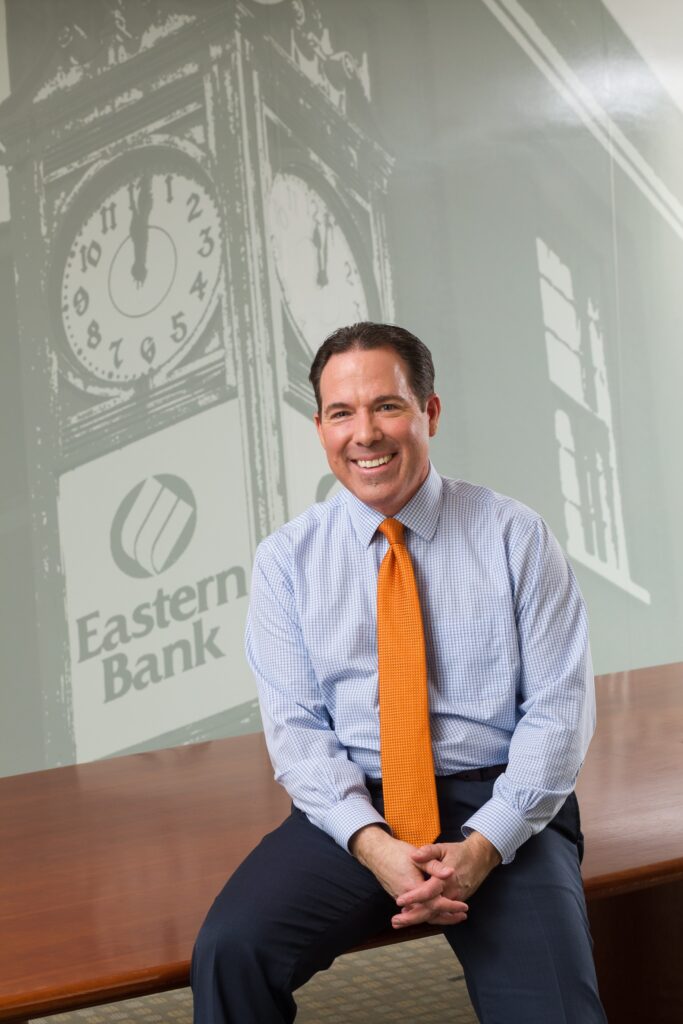
Rivers also strengthened Eastern’s legacy of community building, accessibility, and philanthropy with major investments in the LGBTQ+ community, crediting the 2010 acquisition of Wainwright Bank, a staunch LGBTQ+ ally, with spurring this focus. That year, Eastern became the first of 70 business signatories on an amicus brief opposing the Defense of Marriage Act (DOMA) in our Gill v. OPM lawsuit. The bank also began sponsoring GLAD Law’s Spirit of Justice Award Dinner and providing other generous support.
Rivers’s personal commitment to equality is just as powerful. In 2018, he rallied business leaders to support the “Yes on 3” campaign defending Massachusetts’ trans-inclusive nondiscrimination law. He supports GLAD Law individually as a member of our Equal Justice Council.
Unsurprisingly, Eastern Bank has earned a perfect score on the Human Rights Campaign’s Corporate Equality Index for 11 consecutive years.
We spoke with Rivers about remaining steadfast in supporting LGBTQ+ inclusivity amid the Trump administration’s anti-DEI push, and why other businesses should do the same. “We’ve got to fight like hell,” Rivers said. “As a society, we’ve come too far to go backwards.”
Given the decline in DEI, it’s refreshing to hear you discuss its benefits. What values underlie Eastern Bank’s support for LGBTQ+ inclusion?
Our mission has always focused on those who are less represented in our society, going back to our founding in 1818. We were the third mutual bank established in the U.S., as a bank for all people at a time when there was no national currency or banking system, and only the wealthy had access to merchant banks. Our founders unlocked that capital not just for their own businesses but to provide a safe place to save and borrow for everyone – including women, for whom we were among the first in the country to allow to open bank accounts.
Our emphasis upon supporting the LGBTQ+ community began with our merger with Wainwright Bank because that was an organization that was beloved in the gay community, deservedly so. We wanted to show we were worthy of the mantle, that we could carry it forward, and also elevate it.
What is Eastern Bank doing to ensure federal anti-LBGTQ+ policies and rhetoric don’t undermine your employees’ sense of safety and belonging, especially now?
Internally, we use many tools, including anonymous surveys that gather some demographic information, to gauge how people are feeling.
We now have 13 employee resource groups (ERGs), including Equality Under the Blue for LGBTQ+ employees. These employee-organized groups make sure we’re connected in community, aware of the issues, and identifying advocacy and sponsorship opportunities. They help us understand employees’ experiences and where we should lean in.
We use the Corporate Equality Index metrics to measure how we’re doing as a business in the eyes of the Human Rights Campaign and the broader LGBTQ+ community.
Our DEI dashboard tracks demographic representation across leadership, the board, and other roles. We set targets for diversity because as a community bank we want to reflect the people and places we serve. It begins with talent and fit—but with strong intentionality around proportionate representation.
Our purpose statement is, “We do good things to help all people prosper,” and that’s our guiding principle. I always talk about Eastern as a social enterprise wrapped in a financial services company, because our mission and values are really at the core of who we are. The financial services business provides us the resources to advance that mission. In these times we’ve decided to stay the course. I wrote to all employees in March explaining that DEI is in our DNA, rooted in our history and our values, and changing that would undermine the essence of who we are.
How does Eastern foster intersectional collaboration?
Intersectionality is essential. We’re a diversified business and we worry about silo-ism in our organization because our business thrives on collaboration, cross-referrals, and mutual relationships. It’s the same with our ERGs. They sponsor events open to all, and often collaborate. Employees may be part of Equality Under the Blue and also the Black Professional Alliance, Latinos in Action, or Parents and Families. That overlap makes conversations richer and helps people see that everyone carries multiple identities that aren’t always visible. That opens your perspective, making you more welcoming, and it bonds people because they realize that fundamentally we care about the same things. As a result, we track intersectionality in our DEI dashboard and surveys.
How would you like other businesses or leaders to show up for the LGBTQ+ community right now?
I’d like them to be consistent and continue the work they had been doing. We’ve marched in Boston Pride, for example, for many years, and a lot of companies dropped out this year due to fear of backlash by the Trump administration or whomever. Some of those fears are real, some imagined, some of them are overplayed.
Even as a public company, shareholders have never pushed back on any of our advocacy. Analysts don’t tell me, “Gee, we’re worried you’re putting your business at risk.” When closing our latest merger with HarborOne, no one questioned whether our stances would affect approval. So, my advice to businesses: it’s not as risky as you think.
I know that’s easier for me to say because eastern New England is our market focus. Businesses headquartered here that have significant operations in red states are being scrutinized for their practices. And even though they may have backed off DEI in those locales, those states are using it as a wedge against what those businesses might do here.
Our approach is to think about what our values are and stand behind them and fight for them, as opposed to fighting against something or someone else.
Eastern Bank has supported GLAD Law in many ways. Why is it important for you to support our work?
GLAD Law is on the front line of advocacy for the nation with respect to LGBTQ+ rights. You’re an essential partner because we aren’t lawyers; we care and want to support and amplify the work, but we need GLAD Law to help educate us on where to lean in.
Can you share examples of any lessons learned?
I first met Mary Bonauto in 2010 during the Wainwright merger. She asked us to sign the amicus brief in the DOMA lawsuit. I said, “Count us in.” Our involvement gave us a level of knowledge and led to things we did on our own. Under DOMA, same-sex spouses weren’t recognized in the federal tax code, so we paid affected employees a stipend to offset the disadvantage in their tax benefits until the law was struck down.
We also switched our health insurance provider, with whom we had a long relationship, because we wanted an insurer that would cover transgender health care.
You really walk the talk.
We want employees to know this isn’t lip service. We care about them, we care about the communities they’re part of, and we’re going to take action through philanthropy, policy, and advocacy.
Our mantra is “right and smart.” What do we believe is the right thing to do, and how is it synergized with our business, which is the smart thing to do? Often, the synergy is just the platform our business gives us to talk to other businesses. In talking to other business leaders about LGBTQ+ or other issues, I don’t spend a lot of time on the “right.” Sadly, the moral imperative may not always resonate [in business conversations], but “smart” always does. If you can address how supporting a particular cause is good for business – be it talent attraction, retention, development, your customer base, reputation, etc. – they’re with you.
In times like these – when civil rights, the LGBTQ+ community, and democracy itself are under threat – many companies have abandoned practices they once knew were both right and smart, and in doing so they’ve undermined their own credibility. For Eastern Bank, we chose this road a long time ago. This is who we are, and that’s the hand we’re going to play.
Honoring Service and State Leaders
2025 Spirit of Justice Gala
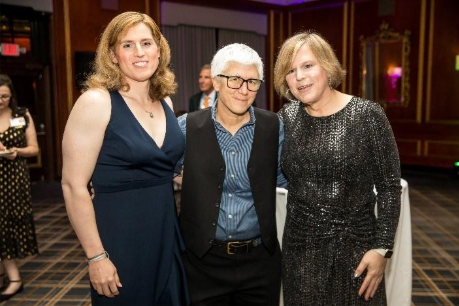
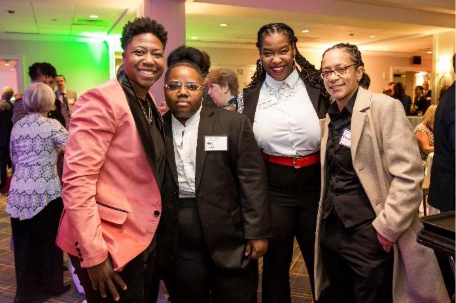
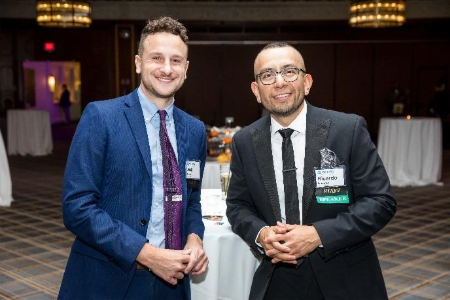
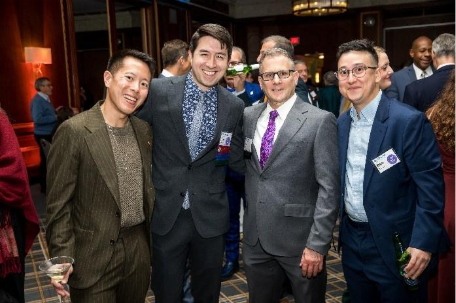
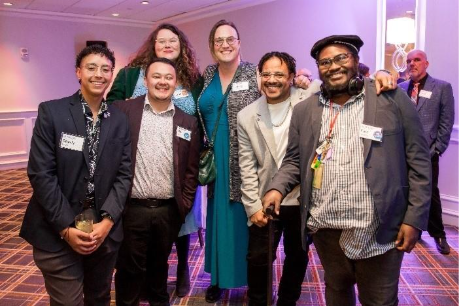
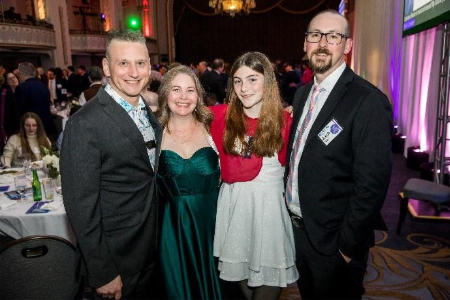
On November 6, we gathered to draw on our community’s strength, and our history of courage, strategic advocacy, creative resistance, collaboration, and compassion with our biggest event of the year, the Spirit of Justice Award Dinner.
We were inspired by Honoree Tony Hoang, who is leading urgent, successful efforts to protect and expand LGBTQ+ rights in California. Together, we celebrated the rights we’ve protected, the harm we have stopped, and the wins we have made to realize our vision of a future of justice and freedom for all of us.
At a time when too many businesses and institutions are giving in and pulling back from supporting equality, we appreciate those who have the courage and conviction to keep showing up, which you can find on our website. We’re grateful and heartened by their resolve for the fight for justice.
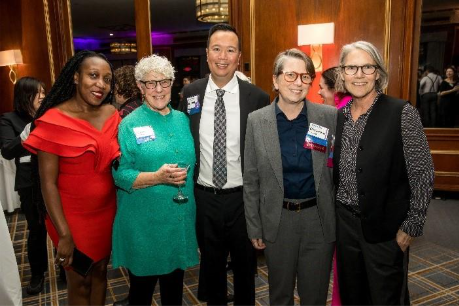
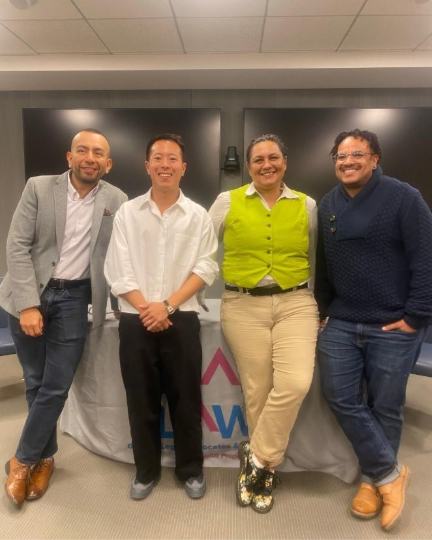
Safeguarding Civil Rights: State Strategies for Defense & Progress.
The previous day, we welcomed our community to join us for a panel discussion with GLAD Law’s Ricardo Martinez, Spirit of Justice Honoree Tony Hoang, Tre’Andre Valentine of Massachusetts Transgender Political Coalition, and MassEquality’s Tanya Neslusan. Together, these California and Massachusetts leaders discussed local advocacy, and how we can create opportunities on the state level to improve protections in the face of ongoing attacks on LGBTQ+ and civil rights at large.
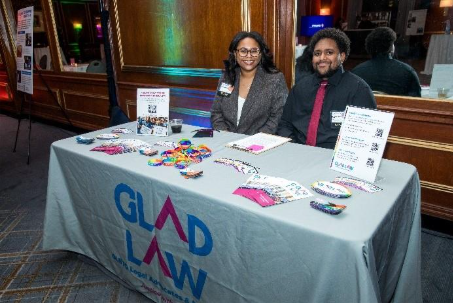
We were also joined by partner organizations to share resources and ways to get involved in this work – the Massachusetts Commission for LGBTQ Youth, MassEquality, and PAIR Project. It was wonderful opportunity to gather in community with activists from across the country, make meaningful connections, and create possibilities for a better future. SOJC
Ensuring Bedrock Nondiscrimination Laws Continue to Protect LGBTQ+ People At Work and Beyond

We are in federal court representing Lillian Bernier, a transgender woman who works nights in a manufacturing plant.
Lillian’s employer, Turbocam, refuses to provide equal workplace benefits, namely coverage for gender transition medical care, in its employee health plan.
Turbocam says it should be exempt from laws that require equal treatment for transgender people because of the owner’s religious beliefs. But Turbocam is represented by conservative legal groups who are also arguing, as part of a concerted national effort, that being transgender is not real.
Today our cases are not just about sustaining legal protections. They are about rebutting attempts to delegitimize transgender people’s very existence.
GLAD Law is fighting for Lillian, who, like most Americans, relies on her job to support her family and get coverage for their medical care. We are fighting to ensure that our nondiscrimination laws, such as Title VII and the Americans with Disabilities Act (ADA), continue to protect our community.
“GLAD Law is developing legal theories that will be building blocks for addressing new attempts to weaken our bedrock nondiscrimination laws,” said Chris Erchull, GLAD Law Senior Staff Attorney. “We have a strong case to make on Lillian’s behalf and a victory will help us chart a path forward to advance LGBTQ+ rights even in this hostile political climate.”
Lillian is a skilled worker at New Hampshire-based manufacturer Turbocam, Inc. She is a dedicated employee who pays into the company’s self-funded employee health plan, but Turbocam maintains a blanket exclusion on coverage for transgender health care that it claims is rooted in its owner/president’s religious beliefs.
Like most working people, Lillian, who is raising two children, relies on her paycheck and employer-sponsored health care to support herself and her family. Because Turbocam refuses to cover care related to her gender dysphoria, Lillian was forced to pay out-of-pocket for some care and has delayed other critical care due to the expense. There is no medical basis for excluding this care from coverage. Lillian sought transgender health care at her doctor’s recommendation.
“I’m proud of my work at Turbocam,” Lillian said. “I’m just asking for fair coverage and to be treated the same as my coworkers.”
In June 2024, the U.S. District Court for the District of New Hampshire denied Turbocam’s motion to dismiss the case, clearing the way for Lillian’s day in court. Both GLAD Law and Turbocam have just concluded months of extensive legal briefing and presentation of evidence. The case is likely to be decided in the coming year.
The litigation initially drew little public attention, but right-wing activists and the Trump administration have seized on it to further their mutual project of delegitimizing transgender people’s existence and stripping away their rights and protections.
Turbocam is represented by attorneys with close ties to the Trump administration and the Federalist Society, and by First Liberty Institute, which is an advisory board member of Project 2025 and has represented defendants in high-profile anti-gay discrimination cases. Their legal filings aggressively deny the existence of transgender people and their need to receive treatment for gender dysphoria.
In August, the U.S. Department of Justice filed a statement of interest supporting Turbocam, which they publicized with a press release that refused to recognize Lillian’s identity and her lived existence, continuing the administration’s pattern of using dehumanizing anti-transgender rhetoric. The filing came amidst the onslaught of policy directives and executive orders by the Trump administration to roll back federal rights and protections for transgender people, and a pressure campaign leveraging federal funding to force state governments, universities, athletic organizations, and health care facilities to do the same.
GLAD Law is ready for this fight because Turbocam is wrongfully using religion to sidestep employment discrimination laws in its mistreatment of Lillian. The Supreme Court has repeatedly rebuffed such claims, including in cases where religious entities or individuals sought to discriminate based on race, and has affirmed that “religious and philosophical objections” aren’t grounds for businesses to break the law. Our opponents are arguing to change this fundamental legal standard, which could further open the doors to workplace discrimination against LGBTQ+ people and others.
“The reality is that their policy is rooted in their dislike of transgender people,” said Michael Haley, GLAD Law Staff Attorney. “This became clear when Turbocam’s owner and president acknowledged in his deposition that the company owner also has religious objections to same sex spousal benefits and IVF treatment, for example, and yet they cover that–casting light on the real motive.”
Turbocam also wrongly claims the ADA doesn’t include protections for people with gender dysphoria. The ADA exists to prevent discrimination based on stigmatized health conditions, and courts, most notably in the case Williams v Kincaid, have ruled the ADA protects against discrimination based on gender dysphoria. In our case, Doe v. MA Dept. of Correction, a judge ruled our client, a transgender woman seeking to be housed in a women’s carceral facility, was likely to prevail on her ADA claims.
As extremists escalate their efforts to undermine LGBTQ+ equality, Bernier v. Turbocam represents a pivotal opportunity to affirm that transgender people like Lillian deserve the same dignity, respect, and protections as everyone else. Lillian’s case is also about much more than one employee’s denied health care. It’s a critical test of whether LGBTQ+ people will continue to enjoy the full protections of significant federal laws.
GLAD Law Attorneys Chris Erchull, Ben Klein, Michael Haley, and Donovan Bendana are working on this case.
GLAD Law Honors Tim Stein with Named Senior Advisor Position

GLAD Law is proud to announce the establishment of the Tim Stein & Wayne Fette Senior Advisor, a position named in October 2025 in memory of Tim Stein.
This position honors Tim’s enduring legacy and his lifelong commitment to justice and lived equality for LGBTQ+ people and those living with HIV. It ensures that GLAD Law will continue to have senior leadership dedicated to advancing our mission through strategic legal advocacy, policy development, and community engagement.
The Impact of Tim’s Gift
Tim’s bequest is already making a difference. The inaugural holder of the Tim Stein & Wayne Fette Senior Advisor position, Gary Buseck, has been involved with GLAD Law in various capacities for more than 40 years, including serving as Executive Director and Legal Director. Since the end of 2020, he has served in the critical Senior Advisor position. As part of this role, his work includes:
- Providing key strategic advice to the legal team and the organization on potential and ongoing matters;
- Mentoring newer attorneys;
- Monitoring developments in the Supreme Court; and
- Engaging in legal research and writing on significant GLAD Law endeavors.
Celebrating the Legacy
To ensure Tim’s impact is recognized across GLAD Law’s work and community, the organization is:
- Updating job descriptions, email signatures, press releases, and the organizational chart to reflect the new title.
- Using the title publicly when the Tim Stein & Wayne Fette Senior Advisor speaks at events, webinars, and meetings.
- Displaying a commemorative plaque in the office, including quotes from the inaugural and future holders of the position.

Tim Stein’s bequest is a powerful reminder that planned giving can shape the future of justice. By including GLAD Law in your estate plans, you can ensure that your values live on and continue to protect LGBTQ+ rights and people with HIV for generations to come.
We invite you to consider joining GLAD Law’s Legacy Society, a community of supporters who have made a lasting commitment to equality by naming GLAD Law in their will or estate plan.
To learn more, visit GLAD Law’s Planned Giving page, or contact our Assistant Director of Individual Giving, Jordan Caress-Wheelwright at 617-778-6725 or [email protected].
All Kids Deserve a Place to Belong at School
The targeting of transgender people across American institutions is chilling, but targeting young people in schools, denying them support and connection during their most vulnerable years, is especially cruel.
GLAD Law has always worked to ensure LGBTQ+ youth have access to equal educational opportunities, including a safe learning environment and a sense of belonging at school. An important place where that sense of belonging has been ripped away from many transgender young people today is school sports.
“When I was going to high school, it was really scary, because I didn’t know who I was gonna know, what it was going to be like,” says Parker Tirrell, plaintiff in our case Tirrell and Turmelle v. Edelblut. “But I had a soccer team…Having the option to [play on a team] and feeling like it’s something you’re allowed to do is helpful to make kids feel less singled out.”
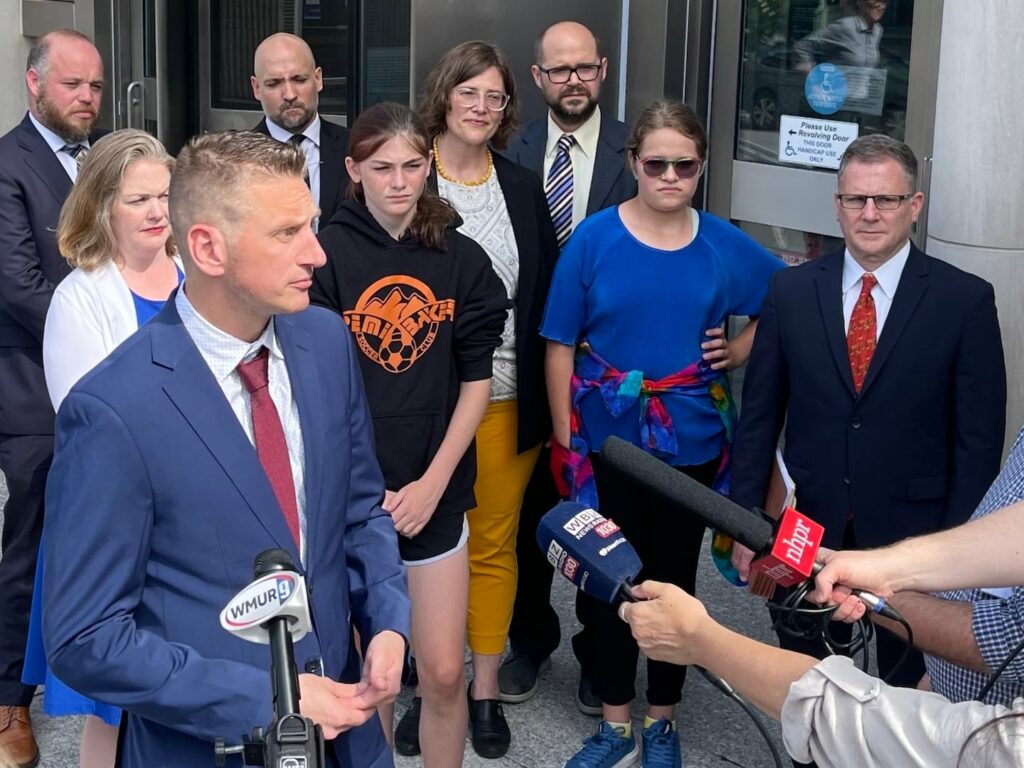
Last summer, we secured a ruling on behalf of Parker and her co-plaintiff, Iris Turmelle, blocking a New Hampshire law banning all transgender girls from playing on girls’ teams in middle and high school. The court found the law discriminates based on sex, and that a blanket ban, barring every transgender girl from participation regardless of circumstances, goes far beyond the state’s claimed justification of ensuring safety and competitive fairness. The undisputed facts in the case showed that Parker and Iris pose no threat to fairness and that their participation does not increase anyone’s risk of injury.
As Parker puts it: “All my teammates, my friends, everyone was always right with me saying, ‘We want to play soccer with you. We want you to be safe, and we think you deserve this too.’”
That ruling ensured that Parker and Iris have the right to try out for their high school teams while the court case continues. Then, in February, the Trump administration accelerated its targeting of transgender young people with an executive order aiming to ban all transgender girls from sports nationwide. We quickly expanded Parker and Iris’s case to challenge that order, too.
Our challenge remains pending in federal court in New Hampshire. Meanwhile, the Supreme Court is set to hear two combined cases brought by students in West Virginia and Idaho who, like Parker and Iris, simply wanted to continue playing on their teams with their friends but were denied the chance because of state laws banning all transgender girls from school sports.
GLAD Law filed a friend-of-the-court brief in the cases before the Supreme Court, West Virginia v. BPJ and Little v. Hecox, arguing that these categorical bans discriminate based on sex in violation of Title IX. Our brief also lays out for the Court that, if a state’s actual purpose is to ensure school sports are fair and safe for all students – rather than discrimination against transgender girls – there are alternative approaches involving case-by-case consideration that have worked well in school districts around the country for years.
The Supreme Court will hold oral arguments in West Virginia v. BPJ and Little v. Hecox on January 13. GLAD Law filed our friend-of-the-court brief on November 17 with the National Center for LGBTQ Rights (NCLR). We were also involved in coordinating the submission of four additional briefs:
We hope the Supreme Court will strike down these harmful and cruel bans because every young person needs the chance to experience the sense of belonging that comes from being part of a team.
As Parker says: “[W]hen you’re younger, finding a place of belonging is just so hard – and taking away places where you can just forget all that, where you don’t have to think about that, just seems like a dystopian idea to me.”
The Focus of the Foster System Should be Children and Families
Hannah Hussey, Staff Attorney, with Polly Crozier, Director of Family Advocacy
The function of foster care agencies must be to provide children in care with stability, acceptance, and the opportunity to reunite with their families. Centering the interests of adults in having a foster child detracts from that core
Several years ago, I interviewed a transgender young person for a project about the challenges facing LGBTQ+ youth in the foster care system. I expected this young adult, who had spent much of their life in foster care, might be able to speak from lived experience to one or two of the many issues that showed up consistently in my research. Instead, over the course of our conversation, this young person touched on most of the key themes I had read about and then some: Frequent moves between foster homes. Bullying and harassment. Placement in group homes. Suicidality. Denials of medical care. Criminal legal system involvement. Domestic violence.
When I later began working as an attorney serving young people in the foster care system, I realized this young person’s story is not uncommon. After separating children from their loved ones, the foster care system too often does a poor job of providing safety, security, and a lifelong connection to caring adults. Foster parents play a key role in this system. At their best, I saw foster parents willing to meet young people where they were at – foster parents who prioritized the child’s needs, who advocated hard for the child, and who showed up with flexibility, support, and openness. In other situations, I saw children mistreated in foster care and saw them displaced when tension emerged between the vision of who foster parents wanted their foster child to be and who the actual young person in front of them was.
The devastating reality of poor outcomes for youth in foster care requires deep systemic change to fix. However, in Massachusetts and in several other states – including Vermont, Washington, and Oregon – resources have instead been pulled into legal battles over adults who want to be licensed to provide foster care. In each of these states, foster parents or prospective foster parents have declined to agree to foster licensing requirements, saying that provisions stating they would support an LGBTQ+ youth in their care conflict with their religious beliefs. When the state accordingly declined to grant them a license, they sued.
The federal government has jumped on this bandwagon, with the Administration for Children and Families sending a series of letters to states that have taken some steps to ensure safe placements for LGBTQ+ youth in care, instructing them to review their policies related to foster parent licensing.
How the Foster Care System Works and Why Family Reunification Matters
These lawsuits, letters, and much of the media coverage surrounding this issue gloss over a critical piece of context: foster care is supposed to be a temporary intervention. Each child has a family into which they were born and belong. Each removal is supposed to be temporary, with the hope of reuniting a child safely with their parent or parents. As a result, foster parents do not have the same legal rights as parents. In fact, many children in foster care have parents whose parental rights are intact and who are fighting to reunify with them. It is impossible to really understand the issues raised in these lawsuits without understanding the troubled patterns of family separation in which they arise.
In the popular imagination, children often enter foster care due to abuse or abandonment. In reality, child protection agencies remove most children from their homes due to allegations of neglect. And importantly, what often surfaces as a neglect accusation is actually about poverty, including lack of safe housing, reliable childcare, and high-quality services to meet physical, mental, and behavioral health needs.
The removal of children by the state falls most heavily on low-income families and families of color. For example, in Massachusetts, Black, Latino, Native American, and multiracial children are disproportionately represented among those removed for neglect. These data exist in the context of historical patterns in which the foster care system and its predecessors separated low-income children and children of color from their families, including the removal of thousands of Native children from their homes and communities as a tool for assimilation.
In response, foster care experts and advocates have prioritized helping families stay together, pushing for state resources to go not to removing children but instead providing the supports necessary to keep children safe at home.
It is in this context that foster parents step forward. While there are many roles in which foster parents serve – ranging from providing brief respite care to fostering a child for multiple years to seeking to adopt – ideally, foster parents are performing a time-limited, stop-gap function until children can reunite with their families. Regardless of the length of time that a foster parent acts as a caretaker, the state bears particular responsibility for children in its care or custody. Thus, when foster parents agree to become caretakers for those young people, they are subject to an intensive application process and a variety of licensing requirements set by the state. In some states – like Massachusetts – licensing policies include baseline expectations for foster parents to respect and support a child’s racial, ethnic, linguistic, cultural, and religious background as well as their sexual orientation and gender identity.
Why LGBTQ+ Youth Face Disproportionate Harm in the Foster Care System
The foster parents’ lawsuits and federal letters (not to mention a similar provision in President Trump’s recent executive order on foster care) also ignore the backdrop against which states have enacted policies designed to protect LGBTQ+ young people. For years, researchers, advocates, providers, and youth themselves have made clear that LGBTQ+ youth are overrepresented but underserved in foster care.
Research across multiple jurisdictions has found that LGBTQ+ youth are disproportionately represented in foster care, with multiple studies finding that approximately one-third of youth in care are LGBTQ+. These young people enter the foster care system in a variety of ways, for a variety of reasons. In some cases, family conflict related to a child’s sexual orientation or gender identity may lead to child welfare system involvement. In other instances, LGBTQ+ children are removed from their homes for the same reasons as their non-LGBTQ peers. Some children identify as LGBTQ+ at the time they enter foster care, but others develop awareness of their identities months or years later. Importantly, not all of these children are out as LGBTQ+ to their caregivers or caseworkers.
Observers have long sounded the alarm about a placement crisis for LGBTQ+ youth in Massachusetts and elsewhere. For example, a 2021 report noted that Massachusetts Department of Children and Families area offices routinely struggled to find placements for transgender youth. Research from other jurisdictions has similarly found that LGBTQ+ youth have a higher number of placements and are more likely to live in congregate care settings. LGBTQ+ foster youth also report higher rates of mistreatment than their non-LGBTQ+ peers. And foster care can be a precursor for juvenile justice involvement, particularly for LGBTQ+ youth of color.
Nearly all young people in foster care have experienced some form of trauma, including the removal from their families of origin. Negative experiences with adult caretakers while in foster care can further compound that trauma, leaving LGBTQ+ youth in an especially precarious position. A failure to meet a young person’s need for support, understanding, acceptance, and safety in their foster home can deepen feelings of isolation or shame or even lead to placement disruption. Each move in which a young person has to leave their foster home for yet another new placement can trigger grief, confusion, and insecurity. Placement disruptions teach hard lessons to young people – lessons like not to stand up for themselves, not to trust adults in their lives, not to get too attached. They also further endanger family bonds, particularly if a change in placement means a separation from siblings who are also in care. And when the state is unable to find a suitable placement for LGBTQ+ young people, they may “vote with their feet” by leaving the home and seeking out other forms of housing and support – putting them in danger of physical and sexual violence and involvement with the sex trade.
Why Supportive Foster Placements are Critical for LGBTQ+ Youth Safety
These challenges highlight the importance of securing caregivers who can meet a young person’s needs in the first instance. It is well established that family acceptance is a protective factor for LGBTQ+ children. When caregivers engage in accepting behaviors, LGBTQ+ youth are less likely to attempt suicide, engage in substance use, or report high levels of depression, and their risk of HIV and other sexually transmitted diseases is lower. Accepting behaviors include supporting a child’s LGBTQ+ identity even when the caregiver feels uncomfortable, supporting a child’s gender expression, and advocating for a child if they are mistreated based on their identity.
This last piece is especially important for young people in foster care, who often lack comprehensive advocacy in important areas like education and medical care. Foster parents, who see and speak with their foster child every day, are well-positioned to engage with caseworkers, attorneys, educators, and medical professionals when an LGBTQ+ child is experiencing discrimination or harassment at school or not getting appropriate medical care.
None of this requires perfection from foster parents, nor does it require foster parents to abandon their faith traditions. Indeed, making efforts to understand and meet the individualized needs of a young person, even when aspects of their identity, beliefs, or lived experience differ, is core to the foster parent experience. Research shows that with support, caregivers (including foster parents) can improve their ability to care for LGBTQ+ youth. Nor do they have to act alone. Facilitating connections between LGBTQ+ young people and resources like LGBTQ+ peer support groups or mentorship programs offers real benefits.
Focusing on the Big Picture
It is critically important for foster care agencies to provide children in care with stability, acceptance, and the opportunity to reunite with their families. Centering the interests of adults in having a foster child detracts from that core function.
As we enter the last weeks of 2026, millions of families across the country will gather to celebrate the season’s holidays with loved ones. For too many children in foster care, that will not be possible. All of us can contribute to the urgent mission of ensuring children and families have the robust support needed to be safe and healthy together. With an uptick in food insecurity following the federal government’s recent refusal to fund SNAP benefits, drastic increases anticipated to health insurance premiums, and threats to critical programs like Medicaid and Headstart, the risk of foster care involvement for families struggling to get by is dire. We invite anyone who professes to want to help youth in care to focus on building a world in which children never enter foster care in the first place.
Get Updates
Thank you for reading the GLAD Law Briefs. Support from people like you makes this work possible.
Join GLAD Law’s mailing list to get updates on the issues you care about, upcoming virtual events, and opportunities to advance equality and justice!
 English
  Español de México
  Português
  简体中文
简体中文  香港中文
香港中文  Français
  Tiếng Việt
  العربية
  Polski
  Русский
  Deutsch
  Kreyòl Ayisyen